
POLITICS
It’s Crystal Clear: Okowa Holds the Ace in the Delta North Senate Showdown

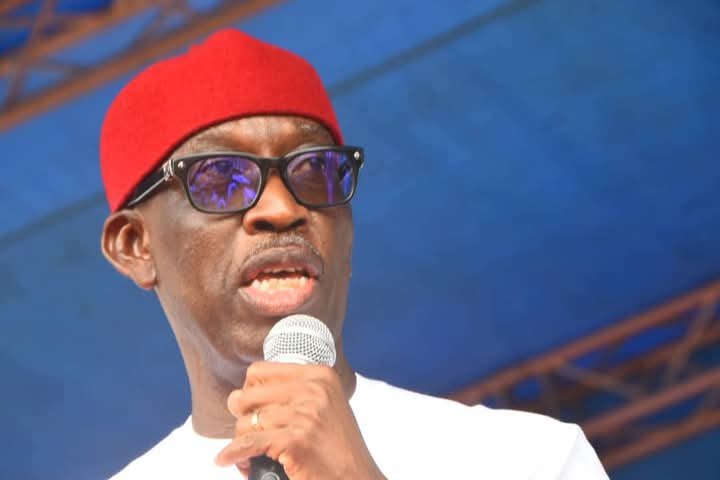
By Daniel Othegbemeh
Politics in Delta State has entered a defining moment. What began as a contest over the All Progressives Congress (APC) senatorial ticket for Delta North has developed into one of the state’s most fierce political contest ahead of the 2027 general elections. At the centre of the unfolding battle are two of Delta North’s most influential political figures, former Governor Ifeanyi Okowa and incumbent Senator Ned Nwoko.
Although the immediate issue is who should represent the APC in the Delta North Senatorial District, the implications go far beyond a party primary. The contest reflects the changing dynamics of politics in Delta State, where old alliances have shifted, new political calculations have emerged and influence within party structures is increasingly being tested.
Both Okowa and Nwoko have travelled different political paths, yet those paths eventually converged in the APC.
Nwoko first came into national prominence when he represented the Aniocha/Oshimili Federal Constituency in the House of Representatives between 1999 and 2003. After years away from elective office, he returned to the National Assembly after winning the Delta North Senate seat in the 2023 general election.
Okowa’s political journey followed a different course. After serving in several public offices, he represented Delta North in the Senate from 2011 to 2015 before serving two terms as Governor of Delta State between 2015 and 2023. His national profile grew even further when he became the Peoples Democratic Party (PDP) vice-presidential candidate in the 2023 presidential election.

For many years, the two politicians were not seen as direct political opponents. Both belonged to the PDP, and their political interests rarely overlapped. That changed following the political realignments that brought both men into the APC. With two influential political structures operating within the same party, competition for political leadership in Delta North became almost inevitable.
The contest came into sharp focus during the APC Delta North senatorial primary in 2026. The party declared Ifeanyi Okowa winner of the exercise, a decision that immediately attracted widespread public attention. Senator Ned Nwoko rejected the outcome, alleging irregularities in the conduct of the primary and challenging the result through the party’s internal appeal process.

For Okowa’s supporters, however, the outcome reaffirmed his enduring political influence after eight years as governor and decades in public service. They argued that his experience, political network and relationship with party members made him the preferred choice of delegates and positioned him as the strongest candidate to lead the party into the 2027 election.
The political momentum appeared to shift further in Okowa’s favour after reports indicated that the APC National Working Committee retained his candidacy and forwarded nomination forms containing his name, alongside those of other successful candidates, to the Independent National Electoral Commission (INEC). Within the party, the development was widely interpreted as reinforcing his emergence as the APC’s Delta North senatorial candidate.
Among those who welcomed the development was the Pan-Anioma political pressure group, Agugu Anioma, which described Okowa’s emergence as “a victory for Ndi Anioma.” In a statement signed by its National Convener, Hon. Chief Louis Ogugua Ndukwe, the group also described the submission of the party’s list to INEC as a “final validation” of Okowa’s emergence. The group attributed his success to his performance in office, his political experience and his connection with party faithful across Delta North and Delta State. It further urged APC stakeholders to unite behind all the party’s candidates ahead of the 2027 general elections.
Supporters of Nwoko, on the other hand, maintained that the incumbent senator deserved a fair opportunity to seek re-election. They questioned the credibility of the primary and argued that the exercise did not reflect the true wishes of party members, insisting that the outcome should be reviewed through the party’s internal processes.
Beyond the competing claims lies a more important question: what does this political battle mean for Delta State and the future of Delta North?
Political analysts have long argued that internal party democracy remains one of the greatest tests facing Nigeria’s political parties. Primary elections are expected to provide party members with a transparent and credible process for choosing their candidates. Whenever that process is questioned, the consequences often extend beyond a single election, affecting party unity, public confidence and future political alignments.
The APC’s handling of the Delta North contest has therefore become an important test of its internal democratic processes. Following the party’s appeal process, the National Working Committee retained Okowa as the APC’s Delta North senatorial candidate and forwarded the party’s nomination documents to the Independent National Electoral Commission (INEC). While political discussions surrounding the primary are unlikely to disappear completely, the latest developments appear to have strengthened Okowa’s position within the party as attention gradually shifts from the nomination process to the campaign ahead of the 2027 general elections.
Another important dimension of the story is the campaign for the creation of Anioma State. Senator Ned Nwoko has made the agitation one of the defining issues of his political career, consistently presenting it as a means of addressing what many supporters regard as the long-standing political aspirations of the Anioma people. His advocacy has kept the issue in public discourse and earned him considerable support among those who believe the creation of Anioma State remains an important objective.
Former Governor Okowa has also publicly expressed support for the creation of Anioma State, maintaining that the aspiration is legitimate and should be pursued through constitutional means and broad political consensus. Although Senator Nwoko has been the most visible face of the campaign in recent years, the political landscape appears to have shifted following Okowa’s emergence as the APC’s candidate. If elected, the expectation among many supporters is that he will build on the momentum already created and continue advancing the campaign for Anioma State through the legislative process.
While the Anioma State campaign has become an important part of the wider political conversation in Delta North, there is no clear evidence that it was the direct cause of the contest between the two politicians. The dispute that played out publicly centred primarily on the APC senatorial primary and the competing claims that followed its outcome.
For many residents of Delta North, however, the issues that matter most go beyond internal party contests. Concerns about employment, roads, healthcare, education, security and economic opportunities continue to dominate public expectations. Ultimately, whoever represents the district in the Senate will be judged not only by political influence within the party but also by the ability to deliver effective representation and tangible development for the people.
As preparations for the 2027 general elections gather momentum, the battle for Delta North has become more than a struggle for a Senate seat. It has grown into a test of political influence, party cohesion and leadership within the APC, while also reflecting the evolving nature of politics in Delta State.
Recent developments within the party appear to have strengthened Okowa’s position following the conclusion of the APC’s internal processes and the forwarding of the party’s nomination documents to the Independent National Electoral Commission (INEC). Even so, the events surrounding the primary have underscored the importance of transparent internal party processes in maintaining unity and public confidence.
At the same time, the expectations attached to the Delta North senatorial seat have become much broader than electoral victory alone. Among the issues that many constituents will continue to watch closely is the campaign for the creation of Anioma State. While Senator Ned Nwoko has played a leading role in bringing the agitation to the forefront of national discourse, recent political developments have shifted attention to Okowa. Should he eventually represent Delta North in the Senate again, many supporters will expect him to sustain the campaign and work with other stakeholders to advance the aspiration through constitutional and legislative means.
Whatever the outcome of the 2027 general elections, the events surrounding the APC senatorial primary have already left a mark on Delta politics. They have highlighted the changing balance of political influence within the state, the significance of internal party democracy and the growing expectations of the people of Delta North. At the end, the true measure of political leadership will not only be victory at the polls but the ability to translate political influence into meaningful development and effective representation for the people.
Othegbemeh, a public affairs analyst, writes from Abraka.







2027: Why I Won’t Attend Every APC Campaign Rally – Tinubu

Isoko South Council Distributes Desks To Public Primary Schools In Delta

Okpara Inland Crisis: Delta CP Visits Community Over Killing Of Don Cross, Orders Investigation

2027: Wike Warns APC Campaign Council, Says Don’t Claim Victory If You Fail To Deliver Your State For Tinubu

Yuleidy Ixcotoyac: 15-Year-Old Girl Wakes Up In Coffin 8 Hours After Father Declared Her Dead

Court Fines Odumodublvck N125,000 Over Adjournment Request in Assault Suit

Tinubu Transmits National School of Government Bill 2026 to Senate, Seeks Repeal of ASCON Act

Plateau Attacks: Three Killed, Two Injured as Gunmen Rustle 114 Cattle

Dispense Justice Without Fear Or Favour, Oborevwori Tells Delta Judges

El-Rufai, Associates Earmarked $600,000 to Bribe EFCC Officials – DSS Witness

Okubor to Chair 2026 DOPF Conference, Lecture Series in Asaba

2027 Gov’ship: INEC Explains Why Some Candidates Were Omitted From Final List

UN Reviews Kenya Over Discriminatory Family Laws As Report Shows Third Of Widows Face Eviction

Payroll Security: Deel Local Payroll CEO Says Single Data Source Will Stop Fraud, Cybercrime

NAFDAC Busts Fake Drinks Factory in Lagos, Arrests Two Suspects