BUSINESS
Okonjo-Iweala: Delta State Poised To Rival Lagos As Nigeria’s Growth Engine

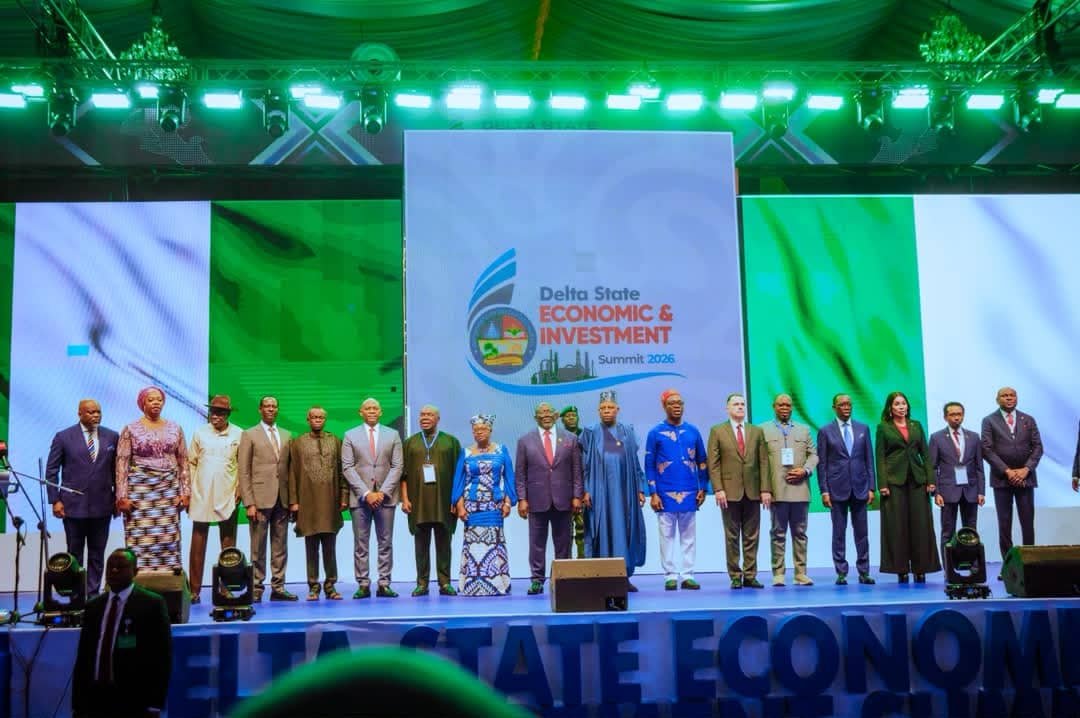
The Director-General of the World Trade Organization (WTO), Dr. Ngozi Okonjo-Iweala, has expressed confidence that Delta State has the potential to become Nigeria’s next major industrial and economic powerhouse, capable of rivaling Lagos as a key driver of national growth.
Speaking on Monday at the Delta State Economic and Investment Summit, Okonjo-Iweala described the state as strategically positioned to emerge as a new growth hub, citing its economic potential, improving fiscal discipline, and investment-focused policies.
“I am convinced that Delta possesses the ingredients to become Nigeria’s next great industrial hub, standing alongside Lagos as an engine of the national economy,” she said. “The emergence of a new growth pole here in Delta State would be good for Nigeria as a whole.”
She also commended Governor Sheriff Oborevwori’s decision to establish a $100 million (approximately ₦137.8 billion) Viability Gap Fund aimed at reducing investment risks and encouraging private sector participation.
“The reason I came is because you take action. The fund you have just announced to de-risk investment is exactly the kind of thing that we need,” she stated.
According to the WTO chief, shifting global trade dynamics have created fresh opportunities for states like Delta to attract manufacturing and industrial investments.

“The world is looking for diversification. These opportunities were not available 10 or 15 years ago. The question is whether we will seize them or allow them to go elsewhere,” she said.
Okonjo-Iweala urged the state government to make Special Economic Zones (SEZs) the foundation of its industrialisation strategy, stressing that their success depends on reliable infrastructure, including electricity, transportation networks, water supply, digital connectivity, and strong collaboration with the Federal Government.
She further advised the state to focus on a limited number of sectors where it holds a competitive advantage rather than spreading resources across numerous projects.
“Identify two or three areas where Delta has strong comparative advantage. Focus on those and build the entire value chain—from production to processing, standards, finance and market access. That is how value is created,” she said.
Highlighting the blue economy as another promising sector, Okonjo-Iweala noted that Nigeria imports about 573,000 metric tonnes of fish and fish products valued at nearly $866 million annually.
“Delta can become Nigeria’s blue economy hub by investing in fisheries, cold-chain infrastructure, port services, and marine logistics,” she added.
She also praised Delta State’s fiscal management, describing it as one of the country’s strongest performers in debt sustainability.
“Keep the fiscal prudence because without it you will not be able to build the Delta State you want,” she advised.
Expressing optimism about the state’s future, she said Delta has the capacity to transform from a resource-dependent economy into one that is diversified, inclusive, and resilient.
Earlier, Governor Sheriff Oborevwori announced the creation of the $100 million Viability Gap Fund, describing it as a strategic intervention designed to de-risk private investments and accelerate industrialisation.
“The government has set aside $100 million, approximately ₦137.8 billion, as Viability Gap Funding to de-risk new investments in the state,” the governor announced.
Also speaking at the summit, Founding Chairman of Seplat Energy and Chairman of the Delta State Economic and Investment Summit, Austin Avuru, called on the state government to prioritise maritime reforms, industrial parks, and commercial agriculture as part of a long-term strategy to attract large-scale private investment and build a globally competitive economy.
He urged Delta State to move beyond its traditional dependence on natural resources and leverage its strategic advantages to achieve sustainable economic growth.








Tinubu Declares 3-Day National Mourning for 32 Air Force Personnel Killed in Ondo Plane Crash

Tennor Global Acquires 65% Stake in Alpha Energy International With $500 Million Funding for Oil Expansion

Adeda: Delta Govt Vows Justice Will Prevail, Dismisses Cover-Up Fears

NAF ATR-42 Crashes in Ondo While on Benin-Lagos Mission

JUST IN: Helicopter Crashes in Igbokoda, Ondo State, Several Feared Dead – Police Confirm

Madam Felicia Idowu, Mother of THISDAY Correspondent, for Burial Oct 30 in Osogbo

Rivers Police Rescue Kidnap Victim After ₦10.3m Ransom, Arrest Two Suspects

Omo-Agege Condemns Sealing of Agbah’s Business Premises, Accuses Ughelli North Chairman of Tyranny

Delta Police Rescue Kidnapped Woman, Arrest 5 Suspected Kidnappers, Cultists in Otu-Jeremi, Abraka

Madonna University Expels Final-Year Nursing Student, Suspends 14 Others Over Viral TikTok Dance Video

IGP Deploys DIG, 2 CPs to Imo as Police Intensify Search for Abducted Corps Members, 18 Others

If Fuel Price Drops To ₦600, I’ll Dump Atiku And Campaign For Tinubu – Rotimi Amaechi

Customs, Stakeholders Renew Commitment To Blue Economy At Onne Port

Oborevwori Mourns As Delta Elderstatesman, Mike Adiotomre, Dies At 88

USCIS to Increase Asylum, Work Permit Fees From October 16, 2026 — See New Rates