OPINION
STANDARDS ARE FINE, BUT THEY SHOULD BE FAIR, BY DANIEL OTHEGBEMEH

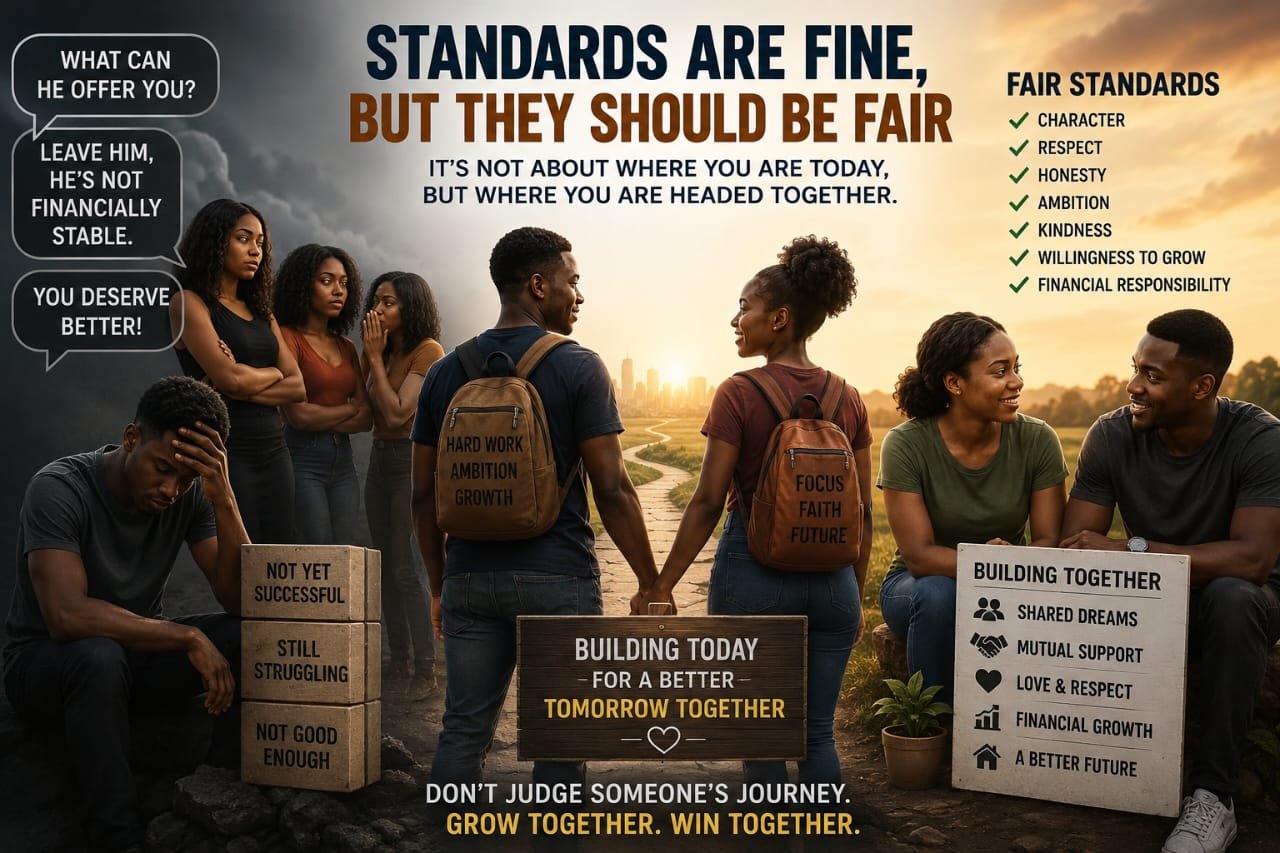
Relationships have always come with expectations. Everyone has a picture of the kind of person they want to spend their life with, and there is nothing wrong with having standards. However, I have often wondered whether those standards are always fair, especially when it comes to financial expectations in today’s dating world.
From what I have personally observed, it is becoming common to hear some young women say they cannot date a man unless he is financially stable. They expect him to have a good income, a good job, or already be successful before they will even consider giving him a chance. While there is nothing wrong with wanting a secure future, I sometimes find it surprising when these expectations come from people who are still trying to build their own lives.
In my opinion, if two people are at the same stage of life and are both working towards financial stability, it does not seem fair for one person to look down on the other simply because of their current financial situation. Many young men are doing their best to improve themselves, just as many young women are. Building a successful life takes time, and everyone moves at a different pace.
I have also noticed that, in some cases, the pressure does not even come from the woman herself. Sometimes, it comes from her friends. A woman may be dating a man who is still trying to establish himself, only for her friends to ask, “What can he offer you?” or encourage her to leave him because he has not yet become financially successful. In my opinion, advice like this often focuses too much on where someone is today instead of where they are working to be tomorrow.
Society also plays a major role in shaping these expectations. Men are still widely expected to be providers, even though we also encourage women to become financially independent and pursue successful careers. There is nothing wrong with women being ambitious or independent, but I believe our expectations in relationships should reflect that same spirit of fairness and shared responsibility.
I am not saying women should not have standards. In fact, if a woman has worked hard, built a successful career, and achieved financial stability, I can understand why she would want a partner who has reached a similar level. That is a personal choice, and everyone has the right to choose the kind of partner they want.

What I struggle to understand is when someone who is still trying to establish herself talks down to young men who are also working hard to build their future. Wanting security is understandable, but mocking or dismissing people simply because they have not “made it” yet ignores the effort they are putting into becoming better versions of themselves.
The same applies to men. I believe every man should work towards becoming financially stable, but not because he is trying to impress someone who is also still struggling. A man should build his life for himself, for his future family, and because financial responsibility is an important part of adulthood. His motivation should come from personal growth, not from trying to meet someone else’s expectations. Likewise, if a woman desires a financially stable partner, there is nothing wrong with that, but she should not make young men who are still striving feel like they are not good enough simply because they are still on the journey.
At the end of the day, everyone has the freedom to choose who they want to date. No one should be forced into a relationship with someone they do not want. My opinion is simple: standards are important, but they should be fair. We should stop judging people only by what they have today and start appreciating qualities such as character, ambition, respect, honesty, and the willingness to build a better future. After all, the person who is struggling today may become successful tomorrow, and everyone deserves to be treated with dignity while they are working towards that future.
Othegbemeh Omokhape is a journalism and media studies student with a passion for opinion writing and social commentary. His work explores relationships, youth development, education, and other social issues affecting everyday Nigerians.


Plateau Attacks: Three Killed, Two Injured as Gunmen Rustle 114 Cattle

Dispense Justice Without Fear Or Favour, Oborevwori Tells Delta Judges

El-Rufai, Associates Earmarked $600,000 to Bribe EFCC Officials – DSS Witness

Okubor to Chair 2026 DOPF Conference, Lecture Series in Asaba

2027 Gov’ship: INEC Explains Why Some Candidates Were Omitted From Final List

UN Reviews Kenya Over Discriminatory Family Laws As Report Shows Third Of Widows Face Eviction

Payroll Security: Deel Local Payroll CEO Says Single Data Source Will Stop Fraud, Cybercrime

NAFDAC Busts Fake Drinks Factory in Lagos, Arrests Two Suspects

Isoko North Chairman Ogorugba Flags Off Ward Empowerment, Gives N10m To 200 Beneficiaries

2027 Election: Wike Mocks Amaechi Over Atiku Prediction, Says Less Than 200 People Attended Town Hall

FG Orders Police to Arrest Suspect in Ogun FMC Attack

SILB Africa 2026: Oborevwori Tasks African Youths On Leadership, Innovation As Bootcamp Opens In Asaba

2026/2027 Legal Year: Oborevwori Charges Delta Judges, Lawyers To Uphold Integrity, Rule of Law

Alleged N69.15m Fraud: Witness Tells Court How Blessing CEO Sold Property She Didn’t Own

Court Dismisses Aisha Achimugu’s N10bn Rights Suit Against EFCC