FEATURED
Nigeria Faces 400,000 BPD Output Loss as Ijaw, Urhobo INEC Protesters Shut 13 Flow Stations

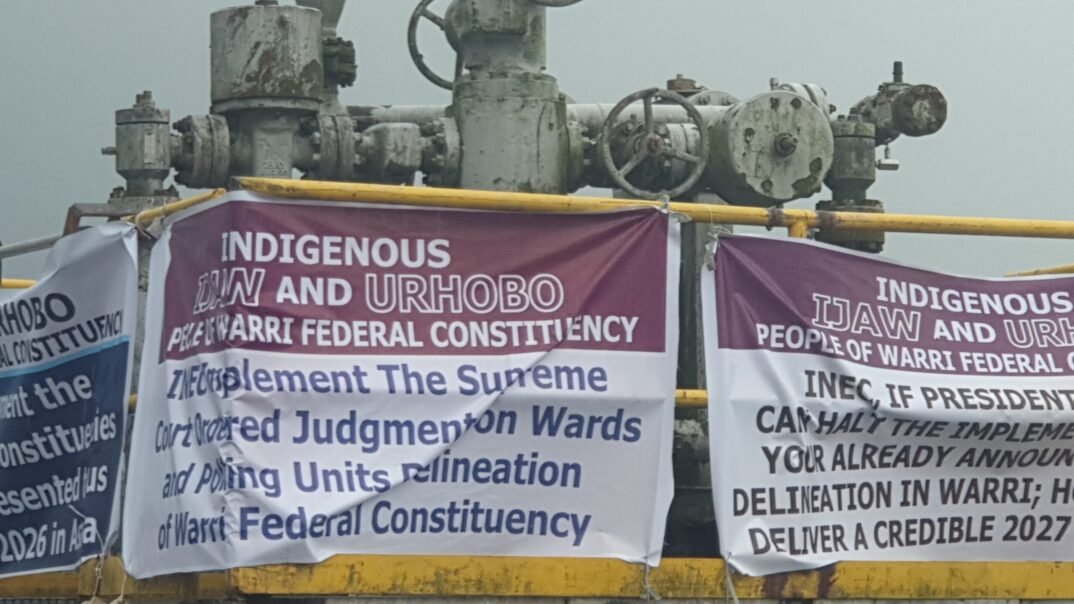
Hundreds of protesters led by women, youth groups, and some community leaders from indigenous Ijaw and Urhobo communities in Delta State, on Monday completely paralyzed operations across key oil and gas assets in the Warri Federal Constituency.
The coordinated protest which took place across the oil assets beloning to Chevron Nigeria Limited, effectively choked off the flow of crude oil at roughly 13 critical flow stations.
BIGPEN NIGERIA (https://bigpenngr.com) reports the protesters issued a firm ultimatum that oil production will remain frozen in the area until the Independent National Electoral Commission (INEC) enforces the long-awaited Warri Federal Constituency delineation report.
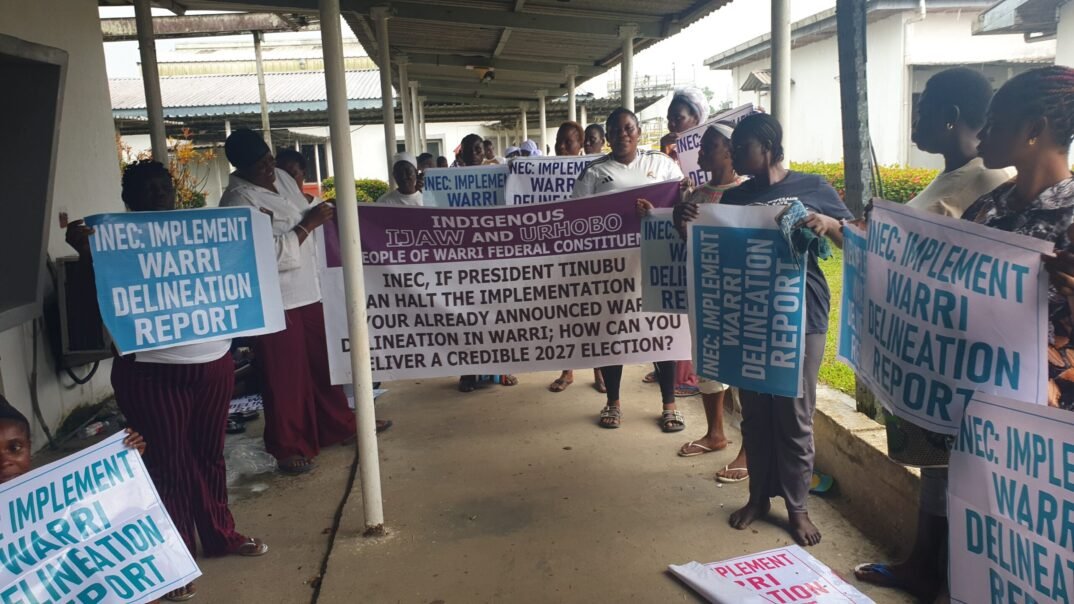
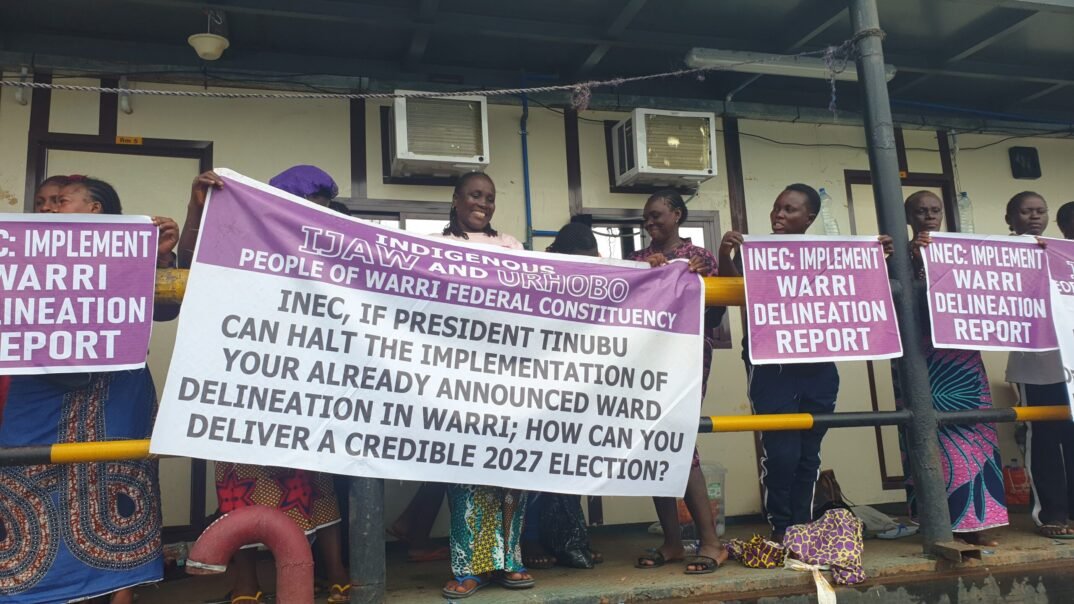
Oil workers have safely evacuated most of the facilities which are currently occupied by a number of women and youths. The presence of security personnel were scanty in the oil facilities during the protest.
The oil facilities disruption marks a major escalation in the ongoing friction over the implementation of a Supreme Court-ordered ward delineation exercise in the oil-rich Niger Delta Communities.
The targeted facilities represent the lifeblood of Nigeria’s onshore oil production. Based on industry data for the designated fields, the financial and operational fallout from the shutdown is immense.
According to data, Kenyagbene (Abiteye) is estimated to produce between 42,000 to 70,000 bpd while Odidi 1 & 2 counts for 150,000 bpd (Combined capacity).

BIGPEN NIGERIA (https://bigpenngr.com) reports Jones Creek produced between 9,000 to 50,000 bpd while Batan targets 30,000 bpd.
Otunana, Makaraba, Dibi, Olero Creeks, Opuekeba, Ogbanabou, Egwa 1 & 2 are estimated to produced 140,000 bpd (Combined asset network).
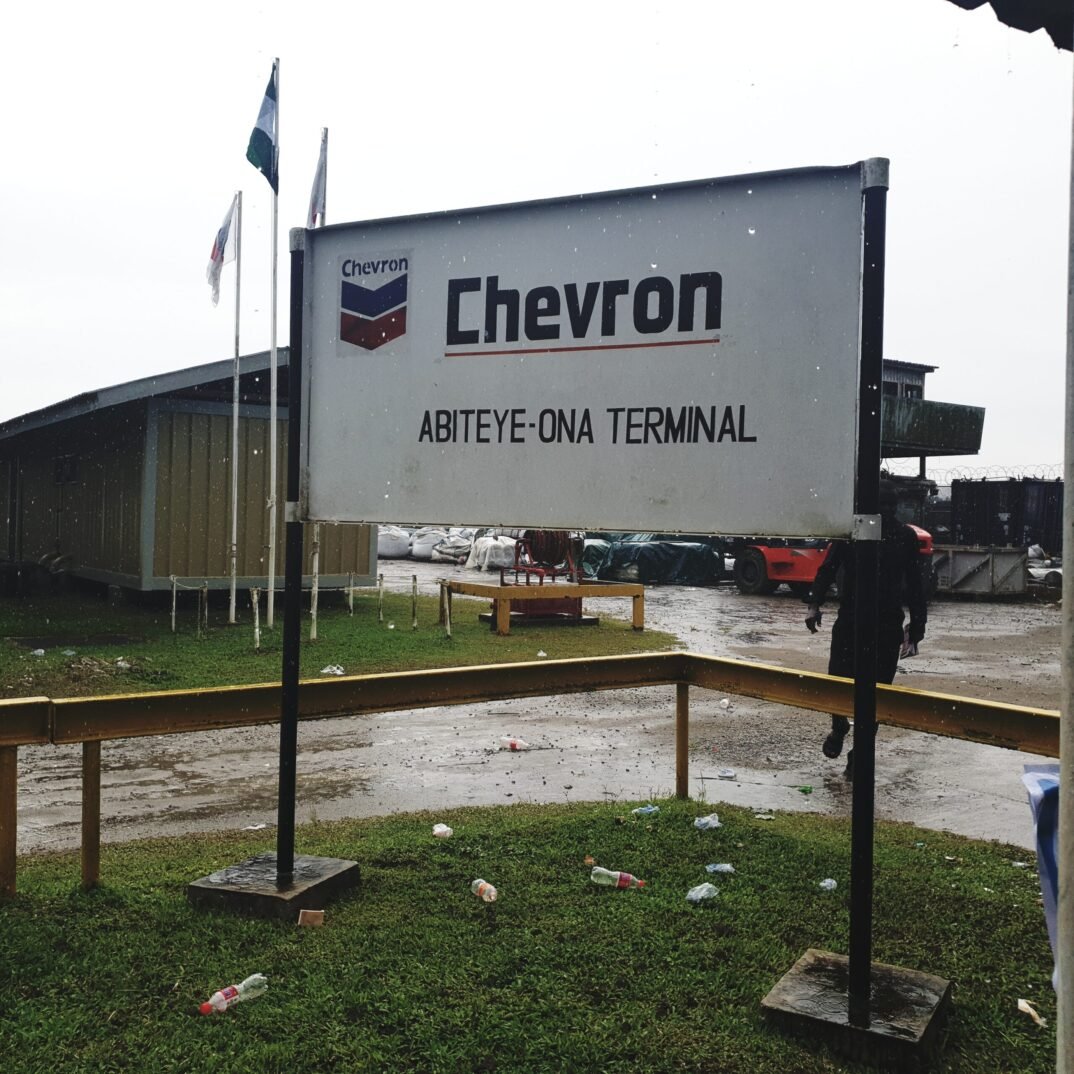
With the shut down of the facilities, over 400,000 barrels per day of oil production have been shut in.
With daily production slashed by over 400,000 barrels, Nigeria risks losing a massive portion of its daily fiscal revenue every single day the deadlock persists.
The protesters who bored various inscriptions reading, “INEC: Implement Warri Delineation Report,” “Court Ordered Judgment on Wards and Polling Units Delineation,” and “No Implementation, No Production,” accused the electoral umpire of sitting on a final framework that it had already presented to stakeholders in Asaba on May 20, 2026.
For the host communities, the standoff is less about partisan politics and more about fundamental survival, civic identity, and democratic equity. They argued it is unacceptable to generate the revenue keeping the Nigerian federation afloat while being systematically erased from the political map.
Speaking from the frontline at the Kenyagbene (Abiteye) facility, Chief Dr. (Mrs.) Marian Ebike A. Ogoba, a prominent community leader, expressed the deep-seated frustration driving the movement.
“The reason we are here is because of the delineation exercise carried out by INEC following the Supreme Court judgment. We are the owners of these communities producing the oil and gas that sustain Nigeria’s economy, yet we continue to suffer marginalisation. We are not fighting anybody. We are only demanding our rights.”
Another prominent voice, Madam Fanty Goodness Owotorufa, emphasized that while the community chose a non-violent approach, their resolve remains unshakeable.
“The Supreme Court has already given its verdict on the delineation of wards. What remains is implementation. That is why we are here. We are peace-loving people, but we want INEC to obey the judgment of the Supreme Court.”
The legal roots of the crisis trace back to a 2022 Supreme Court ruling directing INEC to conduct ward and unit delineation within the Warri Federal Constituency. While INEC ultimately executed the review—collating feedback and defending its conclusions before stakeholders—actual implementation has stalled.
Dr. Paul Boyitie, an opinion leader and former secretary of the Benikrukru Community, questioned the electoral body’s hesitation.
“The report clearly identified the wards occupied by the Ijaw, Urhobo and Itsekiri ethnic nationalities. Why is INEC refusing to implement its own report? We want to participate fully in the 2027 general elections under the approved delineation structure. Until INEC implements the report, we are not leaving.”
A similar blockade took root at the Otunana Flow Station. Representing the Krukrudagbene community, Edith Odafe and Mrs. Gladys Kele both reiterated that the operational shutdown would persist indefinitely until the localized wards and state constituencies publicized on May 20, 2026, are formally institutionalized.
While the protests have proceeded without violence, the complete halt of the major terminals threatens severe economic crisis as the country inches closer to the 2027 electoral cycle.



Isoko South Council Distributes Desks To Public Primary Schools In Delta

Okpara Inland Crisis: Delta CP Visits Community Over Killing Of Don Cross, Orders Investigation

2027: Wike Warns APC Campaign Council, Says Don’t Claim Victory If You Fail To Deliver Your State For Tinubu

Yuleidy Ixcotoyac: 15-Year-Old Girl Wakes Up In Coffin 8 Hours After Father Declared Her Dead

Court Fines Odumodublvck N125,000 Over Adjournment Request in Assault Suit

Tinubu Transmits National School of Government Bill 2026 to Senate, Seeks Repeal of ASCON Act

Plateau Attacks: Three Killed, Two Injured as Gunmen Rustle 114 Cattle

Dispense Justice Without Fear Or Favour, Oborevwori Tells Delta Judges

El-Rufai, Associates Earmarked $600,000 to Bribe EFCC Officials – DSS Witness

Okubor to Chair 2026 DOPF Conference, Lecture Series in Asaba

2027 Gov’ship: INEC Explains Why Some Candidates Were Omitted From Final List

UN Reviews Kenya Over Discriminatory Family Laws As Report Shows Third Of Widows Face Eviction

Payroll Security: Deel Local Payroll CEO Says Single Data Source Will Stop Fraud, Cybercrime

NAFDAC Busts Fake Drinks Factory in Lagos, Arrests Two Suspects

Isoko North Chairman Ogorugba Flags Off Ward Empowerment, Gives N10m To 200 Beneficiaries