
FEATURED
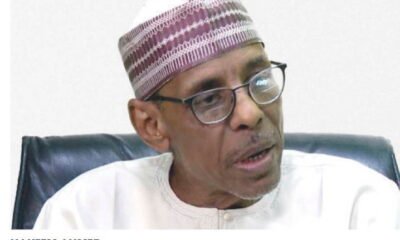
Hakeem Baba-Ahmed Laments Security Failure, Narrates How He Spent ₦175m to Save Abducted Nephew, Others After Official Rescue Efforts Failed


Despite holding a high-level government position, former presidential adviser Hakeem Baba-Ahmed reveals that the Nigerian security agencies failed to rescue his kidnapped nephew, forcing him to spend nearly ₦175 million personally to secure his release.
BIGPEN NIGERIA (https://bigpenngr.com) reports Hakeem Baba-Ahmed’s harrowing account exposes the systemic failure and helplessness many families face amid Nigeria’s rising kidnapping epidemic.
Baba-Ahmed, who served as a Special Adviser on Political Matters to Vice President Kashim Shettima, shared how, even with direct access to the corridors of power, official efforts to free his nephew from kidnappers proved ineffective.
Despite numerous contacts, intelligence sharing, and assurances from security agencies, no rescue operations materialized during the 36 days his family endured captivity.
Instead, he found himself compelled to take matters into his own hands, negotiating with captors and paying hefty ransoms to ensure his nephew’s safety.
He explained that from the moment his nephew was abducted along a rural Kaduna road, efforts to leverage government resources and military might fell short.

“We spoke to security agencies daily, provided coordinates, and stayed in constant contact with the kidnappers,.But despite all our efforts and promises, no rescue came. We were left to navigate the nightmare ourselves”, Baba-Ahmed recounted.
According to Sun, Baba-Ahmed made the revelation during an interview on Trust TV’s Politics Today, parts of which later circulated widely on social media platform X.
Recounting the ordeal, he said his nephew, who is the son of his late sister, was kidnapped alongside three other persons while returning from a farm near Kaduna on the road to Kachia.
According to him, the victims had lodged in a village facility for the night when armed bandits struck.
“They went to a farm they had hired and they used to go there and farm things. They were kidnapped just a few miles after Kaduna on the way to Kachia,” he said.
“They put up in this maybe house, maybe hotel in the village. In the night, bandits came. One of them tried to run away. They followed him, shot him dead, dragged his body back so that the other three can see what will happen if the other three try to run away.”
Baba-Ahmed said the remaining captives were taken into the forest, where they spent 36 days in captivity.
“They were taken just a few kilometres into the bush and they spent 36 days there,” he said.
The former presidential aide noted that the abduction occurred while he was serving in the Presidency, yet efforts to secure the victims’ release through official channels yielded little success.
“At that time, I was the Special Adviser to the President. I was working in the Villa. There was hardly anybody I didn’t speak to,” he said.
He explained that family members remained in daily contact with both the kidnappers and the victims throughout the period of captivity.
“For those 37 days, every single day, we spoke with the bandits and we spoke with our nephew and the two other people. Every day we conversed. Every day they would tell us their condition. We would negotiate.”
According to him, the kidnappers had detailed information about their victims and their families.
“The very day they picked him up, they said, ‘You are Ismail Sahabi? Your uncle is a Special Adviser to the President. He lives in the Villa. He’s a big man. He works in the Villa, so we’re going to get a lot of money’.”
Baba-Ahmed disclosed that the kidnappers initially demanded ₦25 million alongside motorcycles, drugs, rice and other supplies.
“First time they said give us ₦25 million. We thought okay. We looked around for ₦25 million and they wanted three motorcycles and a lot of drugs, medication, rice and all sorts of things, and we sent it to them,” he said.
Despite providing security agencies with information on the kidnappers’ location, he said no rescue operation materialised.
“People say, ‘Give us the coordinates’. And it was easy to get the coordinates. Yes, we gave them all the coordinates.”
He added that by the time the captives were freed, the family had spent nearly ₦175 million.
“We spent all in all, between the first day they were kidnapped and when they were released, close to ₦175 million.”
Providing a breakdown, Baba-Ahmed said about ₦120 million was paid directly in cash through three separate deliveries.
“This ₦175 million was made up of about ₦120 million in cash in three batches. People took the money. We sent people to them and they gave us directions.”
In one instance, he claimed those delivering ransom money encountered military personnel who unknowingly directed them towards the kidnappers.
“One of the three times they took money, they even ran into some military people who said, ‘You are going in the wrong direction. This is the way to go’.”
Describing the criminal network behind the kidnappings, Baba-Ahmed said his nephew told the family that those holding them were merely foot soldiers working for more powerful figures.
“When our nephew was released and we asked him what they did with all that money, he said if money got to them by 6pm, by 9pm a whole bunch of their seniors would come and take everything away.”
“He told us they said, ‘We are just safe keepers. There are bosses, and they have bosses, and they have bosses’. This is an industry.”
Asked why he eventually agreed to pay such a huge ransom, Baba-Ahmed said he feared the captives would be killed.
“I begged. I begged them because I didn’t believe that those people would let them go, in spite of the fact that we were giving them everything.”
“When he was released, I could barely recognise him. He still lives with injuries. He was malnourished.”
The former presidential aide said the kidnappers threatened to execute the victims unless a final payment was made.
“The very last money we sent, close to ₦100 million, was because they said this is the last demand we make and we want it within 48 hours or we’ll kill these people.”
“My nephew said they will kill us.”
Baba-Ahmed expressed frustration over the inability of security agencies to rescue the victims despite repeated appeals.
“What did the security people tell you? They said, ‘We are trying to rescue them’. Thirty-seven days, and they kept saying, ‘We are trying our best’.”
He argued that kidnapping in Nigeria has evolved into a sophisticated criminal enterprise supported by extensive networks.
“There is a system behind this. This is not just riffraff Fulani people.”
“I think there is a whole organisation. There is a huge, very tight network of these people. They have intelligence, they have access to weapons, they have access to communities.”
According to him, the scale and organisation of kidnapping operations suggest the involvement of a far-reaching criminal structure that continues to thrive despite government efforts to combat insecurity.






Warri Mourns Uduaghan At Erowa/Umeh Empowerment, Gives N50k Grant To 200 Residents

FG Clears N100bn Gas Debts, Moves to Boost Electricity Supply

FG Woos Global Investors With World-Class Mineral Discovery In Kaduna Ahead Of Nigeria NOW! Summit

Tinubu to Kwankwaso at 70: Political Differences Won’t Diminish My Affection for You

‘Foreigners Now Beg for Nigerian Passports’, Says Dabiri-Erewa

Okubor To INEC: Introduce Course On How To Lose Election Without Losing Your Mind

Nigeria Confirms First Ebola Case as Deadly Bundibugyo Strain Hits Abuja

Prioritise Credibility, Profitability Over Traffic – Aniagwu Charges Online Publishers

Look Beyond Page Views To Build Profitable Media – DOPF Tells Online Publishers

Delta Police Arrest Three For Impersonating SGF Akume, Oborevwori’s Protocol Director To Defraud Community Leader Of N5.4m
Ebola Alert: 20 Key Facts As FG Traces 44 Contacts Over Suspected Case In FCT

I Never Asked Nigerians in Diaspora to Abandon Their Families — Peter Obi

‘If Buhari as a General Couldn’t End Insecurity, Spare Tinubu’ — Abdulaziz Yari

Tinubu Condoles With Ibori, Uduaghan Family Over Ex-Governor’s Death

DOPF Opens 2026 Annual Conference With Workshop On Digital Media Sustainability