
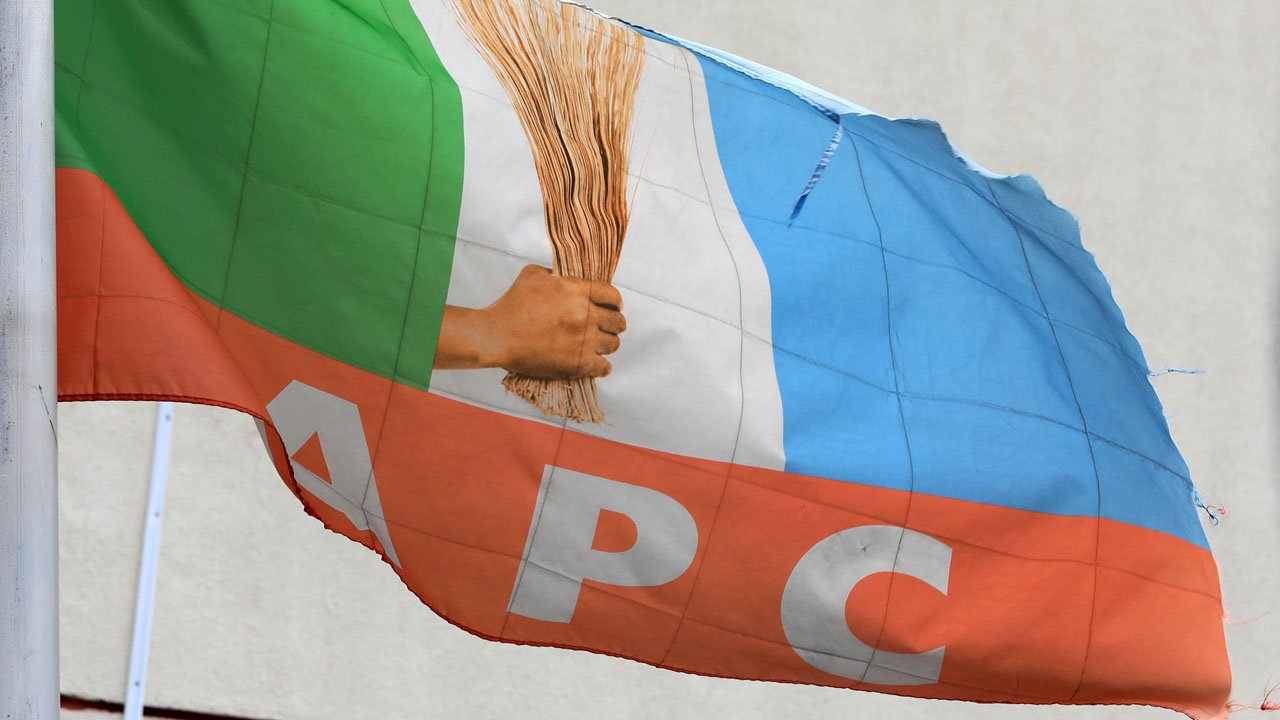
A full-blown internal crisis has erupted within the All Progressives Congress (APC) in several states following the conduct of senatorial primaries, as the Presidential Villa and the National Working Committee (NWC) of the party find themselves on a collision course with state governors who defied carefully signalled preferences from the presidency.
The crisis, which had been brewing beneath the surface of the party’s primary season, burst into the open as results from several states contradicted the wishes of the national leadership, raising the real prospect of the NWC invoking its constitutional powers to set aside outcomes and impose candidates that better reflect the will of the Presidential Villa.
What was designed to be an orderly exercise in internal democracy has instead become a theatre of competing authorities, with scenes of violence, petition writing, open rebellion and procedural manipulation playing out across the country.
At the heart of the crisis is a pattern that played out in at least three states where aspirants believed to enjoy the backing of the Presidential Villa were either edged out or overlooked in favour of candidates preferred by incumbent governors.
In Edo State, it was learnt that the wife of President Bola Tinubu, Mrs. Remi Tinubu, threw her weight behind Pastor Osagie Ize-Iyamu for a senatorial ticket, yet parallel and conflicting declarations from the exercise suggested that the governor’s preferred structure prevailed on the ground.

In Delta State, President Tinubu’s body language was widely read within party circles as an endorsement of former deputy Senate president, Ovie Omo-Agege, for Delta Central, yet the governor moved firmly in a different direction.
In Bayelsa, Ben Murray-Bruce was understood to have secured the nod of the Villa, only for the state governor to disregard that signal entirely and assert his own authority over the outcome.
The trouble, however, was by no means confined to those three states. In Ondo State, the senatorial primaries in Ondo Central were rocked by severe disruptions, gunshots and violence orchestrated by political thugs, prompting aggrieved aspirants to file an official petition with the National Chairman and label the exercise a kangaroo process manipulated by powerful state actors.
The national leadership had earlier rejected a consensus list backed by Governor Lucky Aiyedatiwa, a snub that deepened existing tensions and set the stage for the breakdown that followed.
In Ogun State, serving lawmakers and outraged party members openly condemned the exercise as shameful, with Deputy Chief Whip Isiaka Ibrahim accusing Governor Dapo Abiodun of orchestrating a heavily manipulated affirmation process rather than conducting a genuine primary election, a charge that has drawn significant attention within party circles.
The disorder spread further to Kogi, Kwara and Taraba states, each producing its own distinct brand of crisis.
In Kogi East, incumbent Senator Jibrin Isah fiercely rejected the primary results, accusing Governor Ahmed Ododo’s camp of hijacking election materials and systematically intimidating his supporters in what he described as a coordinated takeover of the process.
In Kwara Central, absolute confusion descended after a ‘fraudulent’ cleared aspirants list surfaced on the morning of the election, falsely including the name of a prominent governorship aspirant and referencing a non-existent Kwara East district. The exercise was subsequently downscaled to an affirmation process widely seen as serving the interests of Governor AbdulRahman AbdulRazaq.
In Taraba North, fierce grassroots backlash erupted as youth groups and local party stakeholders openly revolted against a screening committee endorsement that favoured incumbent Senator Shuaibu Isa Lau, exposing deep dissatisfaction with the manner in which the exercise was conducted.
Sources within the party told Daily Sun that the pattern also extends to Nasarawa, Plateau and Rivers States, which have equally been identified as flashpoints where the interests of the national leadership and state governors failed to converge.
In Nasarawa, the contest between consensus and competitive primaries produced public divisions, with former governor Umaru Tanko Al-Makura openly backing a candidate whose emergence the state structure had not endorsed.
In Rivers State, the complex and unresolved power dynamics between competing factions within the APC have made the outcome of any primary exercise deeply susceptible to challenge from multiple directions.
Party sources confirmed to Daily Sun that the NWC is now conducting a quiet audit of results from these and other states, with overrides being actively considered wherever due process is found to have been compromised.
Prior to the commencement of the primaries, the party’s national leadership had moved to provide itself with the procedural cover needed to justify any intervention.
The National Secretariat issued a disclaimer signed by Albukalreem Bala Kwali, Chief of Staff to the National Chairman, declaring that all results being circulated in the media were unauthorised and did not represent the party’s official position, stressing that the NWC had explicitly directed that no results should be announced until they had been formally reviewed, verified and approved.
The disclaimer followed an earlier directive from National Organising Secretary Sulaiman Argungu, warning all primary committees against conducting media briefings outside Abuja, giving the NWC a firm procedural basis on which to review, adjust or nullify outcomes that do not align with the preferences of the national leadership.
The deepening crisis exposes a fundamental fault line at the heart of the APC’s internal architecture, one between the centripetal authority of a presidency that expects its preferences to be respected and the centrifugal force of state governors who control structures on the ground and are unwilling to cede that control regardless of signals from Abuja.
Political analysts warn that the party stands at a critical juncture, where the manner in which it resolves these disputes will either reinforce President Tinubu’s grip on the party machinery or embolden governors to continue acting as independent power centres.
With the 2027 general elections drawing steadily closer, the APC’s ability to present a united and disciplined front to the electorate may depend entirely on how decisively and how fairly it brings this internal reckoning to a close.