BUSINESS
Made-In-Nigeria: Harvestfield Begins Local Production Of Next-Gen Mosquito Nets In Ogun

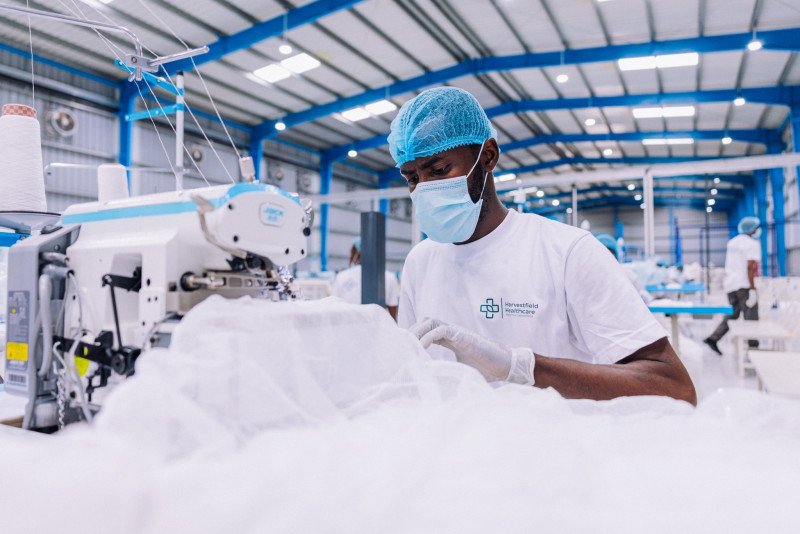
Nigeria’s healthcare manufacturing capacity has received a major boost as Harvestfield Healthcare FZE has commenced commercial production of next-generation mosquito nets in the country.
The company announced it has started commercial production of Synera DuoForte, a dual active ingredient, next-generation insecticide-treated net, at its manufacturing facility in the Harvestfield Free Trade Zone, Ogun State.
Operations at the facility commenced on September 13, 2026, and it is already supplying a World Bank-funded malaria prevention programme covering 31 states of the federation.
According to the company, the facility is the first wholly Nigerian-owned plant in Nigeria to manufacture dual active ingredient long-lasting insecticidal nets (LLINs) of the pyrethroid-chlorfenapyr class.
Harvestfield manufactures the nets under a manufacturing agreement with GDM Health Products, producers and owners of Synera DuoForte, a World Health Organisation (WHO)-prequalified product.
Why Dual-Insecticide Nets Matter

Unlike conventional nets that rely primarily on pyrethroids, Synera DuoForte combines a pyrethroid with a second insecticide – chlorfenapyr – which works through a different mode of action.
The innovation is critical as mosquito populations across much of Nigeria have developed resistance to pyrethroid insecticides.
While conventional nets still provide a physical barrier, resistance reduces their insecticidal effect.
Dual active ingredient nets are designed to remain effective in such areas and are recommended by the WHO for areas with established pyrethroid resistance.
The Harvestfield facility in Ogun State is listed as an approved manufacturing location under GDM’s WHO prequalification.
The site is also certified by the National Agency for Food and Drug Administration and Control (NAFDAC) and is ISO certified, meeting international standards required for national malaria programmes.
A representative of GDM Health Products, Jon Bastow, said the partnership is strategic for Nigeria.
“GDM is pleased to strategically partner with Harvestfield to bring Synera DuoForte to Nigeria, the country with the biggest global malaria burden, and support the prequalification of Harvestfield’s Ogun State manufacturing facility to make Synera DuoForte,” Bastow said.
FG Hails Move, Says It Aligns With Renewed Hope Agenda
Commenting on the development, the Coordinating Minister of Health and Social Welfare, Professor Muhammad Ali Pate, said local manufacturing is central to health security.
“Building the capacity to manufacture our own health products is central to Nigeria’s health security.
A Nigeria-based facility producing next-generation insecticide-treated nets to international standard, and already supplying programmes across thirty-one states, is the kind of capability the Renewed Hope agenda was created to build,” Pate said.
For Harvestfield, the move builds on 26 years of experience in Nigeria’s vector control sector. The group has delivered over 42 million insecticide-treated nets across all 36 states and has served as an exclusive national distribution partner for WHO-prequalified nets since 2018.
The shift from distribution to local manufacturing is expected to strengthen the domestic supply chain, reduce dependence on overseas supply schedules and the 45 to 60-day ocean freight associated with imported nets, and enable faster response as malaria resistance patterns evolve.
The National Coordinator of the Presidential Initiative for Unlocking the Healthcare Value Chain (PVAC), Dr Abdul Mukhtar, said the development captures the essence of the initiative.
“PVAC exists to move Nigeria from importing its health products to making them. What matters is not only that a factory exists, but that it meets the standards international buyers accept and can supply at national scale. A facility based in Nigeria doing both is precisely the outcome this initiative was created to unlock,” Mukhtar said.
The company said the investment also creates local capabilities in manufacturing, technical operations, quality assurance and regulatory compliance that can support other health products in future.
The development aligns with the Federal Government’s push for domestic production of health products under the Renewed Hope Agenda, PVAC, and the Nigeria First procurement policy.







Tinubu to Kwankwaso at 70: Political Differences Won’t Diminish My Affection for You

‘Foreigners Now Beg for Nigerian Passports’, Says Dabiri-Erewa

Okubor To INEC: Introduce Course On How To Lose Election Without Losing Your Mind

Nigeria Confirms First Ebola Case as Deadly Bundibugyo Strain Hits Abuja

Prioritise Credibility, Profitability Over Traffic – Aniagwu Charges Online Publishers

Look Beyond Page Views To Build Profitable Media – DOPF Tells Online Publishers

Delta Police Arrest Three For Impersonating SGF Akume, Oborevwori’s Protocol Director To Defraud Community Leader Of N5.4m
Ebola Alert: 20 Key Facts As FG Traces 44 Contacts Over Suspected Case In FCT

I Never Asked Nigerians in Diaspora to Abandon Their Families — Peter Obi

‘If Buhari as a General Couldn’t End Insecurity, Spare Tinubu’ — Abdulaziz Yari

Tinubu Condoles With Ibori, Uduaghan Family Over Ex-Governor’s Death

DOPF Opens 2026 Annual Conference With Workshop On Digital Media Sustainability

Isoko South Flags Off Mega Empowerment, 4,000 Residents To Get N50,000 Each

Blackout Hits Four States as NUEE Shuts Down BEDC Facilities Over Welfare Dispute

Isoko North Chairman Empowers 5,000, Hails Oborevwori’s Grassroots Initiative