
FEATURED
FG Turns to Bonds as Power Sector Debt Hits N6trn

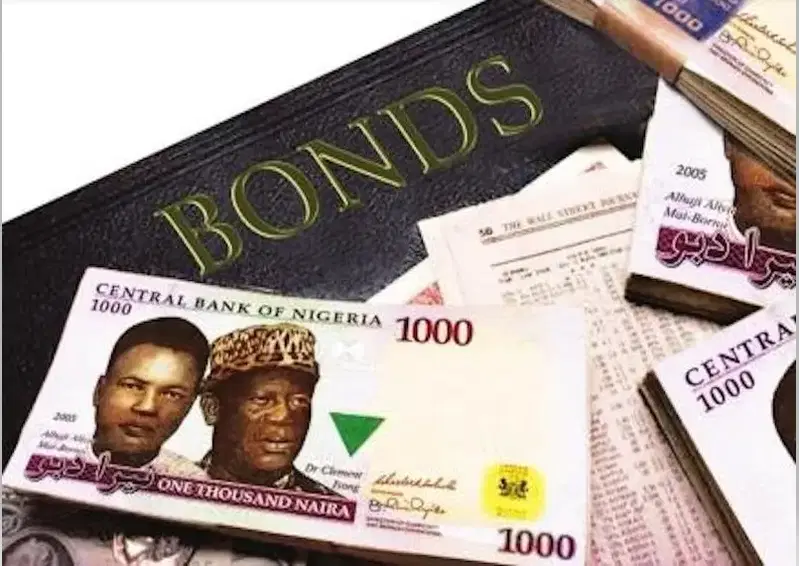
The Federal Government has turned to the bond market to address mounting debts owed to electricity generation companies (GenCos), as its outstanding obligations to power producers reportedly approached N6 trillion at the beginning of 2026.
The growing debt burden comes amid persistent electricity supply challenges and the government’s inability to fully fund electricity tariff subsidies through annual budgetary allocations.
According to the Nigerian Electricity Regulatory Commission’s 2025 industry report, the Federal Government’s gross electricity tariff subsidy obligation stood at N1.928 trillion in 2025, representing 57.44 per cent of the total invoice issued by the Nigerian Bulk Electricity Trading Plc.
The amount translated to an average monthly subsidy obligation of N160.69 billion.
A breakdown of the figures showed that the government incurred N536.40 billion in subsidy obligations in the first quarter of 2025, N514.36 billion in the second quarter, N458.76 billion in the third quarter and N418.79 billion in the fourth quarter.
The 2025 figure represented a marginal decline from the N1.949 trillion recorded in 2024.

In a move to address the accumulated liabilities, the government in September 2026 signed a N728.979 billion Series 2 bond under its N4 trillion Power Sector Debt Reduction Programme.
The transaction comprised N402 billion in cash bonds raised from the domestic capital market and N326.979 billion in non-cash bonds allocated to participating generation companies.
The initiative is aimed at settling verified legacy debts owed to GenCos and restoring liquidity to the power sector.
The Managing Director and Chief Executive Officer of NBET, Akin Odeyemi, said the company had commenced settling participating generation companies and their associated gas suppliers following the successful issuance and signing of the bonds.
He said the transaction represented a significant step in implementing the Presidential Power Sector Debt Reduction Programme under President Bola Tinubu’s administration.
“The settlement is being undertaken through a combination of N402,000,000,000.00 in Cash Bonds and N326,979,000,000.00 in Non-Cash Bonds, in accordance with the approved settlement framework,” Odeyemi said.
Despite concerns over the sector’s performance, the Minister of Power, Joseph Tegbe, has maintained that electricity supply has improved over the past three months, although some parts of the country continue to experience poor service.
Tegbe said operational records showed that electricity generation and transmission had remained above 5,000 megawatts in recent weeks, compared with between 3,700MW and 4,700MW before June.
He added that generation peaked at 5,330MW during August and September.
“Our next task is to sustain these gains and translate them into more dependable supply at customer level. We are aware that a national peak alone cannot describe the experience of every community,” the minister said.
According to him, the government’s strategy focuses on stabilising the electricity value chain, restoring market discipline and strengthening governance.
He cited the restoration of the 375MW Alaoji open-cycle power plant to the national grid after three years offline as one of the administration’s interventions.
The minister also disclosed that transformers had been commissioned at Apapa, Ijora, Alausa and Lekki in Lagos, unlocking 672MW of transmission capacity.
In Abuja, a new 300MVA transformer had been energised at Katampe, adding another 240MW of transmission capacity.
Tegbe said the government was also expanding access to electricity through renewable energy projects, particularly solar power.
He noted that completed electrification projects implemented by the Rural Electrification Agency and its partners comprised 62 solar and mini-grid installations across 30 states.
The projects represent about 43.6MW of installed solar capacity and have provided 41,735 new connections, with an estimated reach of more than 208,000 people.
Meanwhile, the Special Adviser to the President on Power and Chairman of the Presidential Task Force on Power Sector Reset and Restoration, Dr Lanre Babalola, has said Nigeria’s electricity reforms remain incomplete.
Babalola argued that the country’s power crisis was not solely a problem of inadequate generation capacity but also reflected the inability to consistently convert available capacity into reliable electricity supply, commercial value and sustainable investment.
“Our deeper problem is that we have not yet built a system capable of consistently converting available capacity into reliable electricity, commercial value and sustainable investment,” he said.
He recalled that the power sector had undergone unbundling, with generation and distribution assets privatised and NBET established as a bulk trader to support the transition towards a competitive electricity market.
However, he said the transition had not been fully completed as originally envisaged.
According to him, the single-buyer model was designed as a temporary arrangement to provide a credible intermediary while market participants developed the financial capacity needed for direct contracting.
“But a transitional mechanism becomes a structural constraint if the transition never happens. The objective cannot be to preserve the institutions of transition indefinitely. The objective must be to complete the transition,” Babalola said.
Reacting to the figures, a lawyer and Lead Consultant on Power Sector matters at Sage Consulting, Bode Fadipe, questioned whether electricity consumers were receiving value commensurate with the money spent on the sector.
“What this data has just confirmed is that Nigerians have been paying for darkness,” Fadipe said.
He identified inadequate investment in electricity infrastructure as one of the major factors limiting improvements in supply.
Fadipe also defended the Nigerian Electricity Regulatory Commission’s directive requiring electricity distribution companies to retain part of their revenue for infrastructure investment.
He said the distribution companies had strongly opposed the directive, but NERC had insisted on its implementation.
However, he noted that the extent to which the companies had complied with the order remained unclear and required further investigation.
Fadipe urged NERC to enforce its investment directives strictly, establish clear timelines for service improvements and conduct forensic audits of investments by distribution companies to determine whether funds earmarked for infrastructure were being properly utilised.
He also called for closer collaboration between the regulator and market participants to improve debt recovery across the sector.
The Executive Director of the Electricity Consumer Protection Advocacy Centre, Chief Princewill Okorie, also expressed concerns over the quality of electricity services delivered to consumers despite the substantial funds involved in the sector.
Okorie said the decentralisation of electricity regulation under the new legal framework had brought regulatory oversight closer to consumers at the state level.
However, he argued that weak enforcement of consumer protection provisions continued to expose electricity users to several challenges, including estimated billing, infrastructure charges and alleged violations of regulatory directives.
He alleged that residents of some communities had been compelled to contribute money towards purchasing transformers and other distribution equipment despite the obligations of electricity distribution companies.
While poor revenue collection and consumers’ failure to pay bills are often cited as reasons for inadequate electricity supply, Okorie said the accuracy and transparency of the bills issued to customers must also be examined.
“The appropriate question to ask is: how did they generate these bills? Were they justifiably, accountably and transparently generated?” he asked.
He called for stronger enforcement of electricity regulations, improved public awareness of consumer rights and a dedicated mechanism for investigating alleged violations in the sector.
Okorie also questioned the absence of a dedicated consumer protection unit in the Federal Ministry of Power and urged relevant consumer protection authorities to become more involved in educating electricity users about their rights.
Vanguard reports that he further challenged the government’s claims of subsidising electricity, arguing that consumers in some cases bear the cost of essential distribution infrastructure, including poles, cables and transformers, without reimbursement from the utilities.
The concerns underscore the challenges facing Nigeria’s power sector, where the government continues to grapple with mounting financial obligations, incomplete market reforms and persistent complaints over unreliable electricity supply.


FG Turns to Bonds as Power Sector Debt Hits N6trn

How Patients, Hospital Staff Foil Attempt to Steal Newborn in Lagos

Buhari Resisted Pressure to Hand Power to Tinubu, saw him as ‘Bad News’ — PRP Chair

DOPF 6th Lecture Series: Umahi Joins Panel, Prof Emina To Moderate Discussion

Police Arrest 5 Suspected Kidnappers, Armed Robbers In Delta, Recover Guns

‘Don’t Give In To Blackmail’ — How My Father Stopped Me From Resigning After My Mother’s Kidnap — Okonjo-Iweala

N’Assembly Clerk Warns Against Lobbying for Promotions, Cites Risk of Legal Battles
Police Rescue One-Month-Old Baby Allegedly Sold for N2m in Oyo, Arrest Mother, Clinic Owner

CAN Honours Oborevwori With Christian Icon Award At 50th Anniversary

Buhari Offered to Back Osinbajo’s Presidential Bid Four Times, Akande Counters Babachir Lawal

DOPF 2026 Conference: Oborevwori To Attend As Obukoadata, Chiazor, Imegwu Lead Panel In Asaba

Oborevwori’s CPS Ahon Meets New Delta NUJ Exco, Calls For Closer Synergy With Government

Full List: Tinubu Nominates 4 New INEC Commissioners, 2 RECs — See Names, States

NNPC Confirms Rivers Pipeline Explosion, Residents’ Homes and Businesses Damaged

Police Raid Cult Anniversary Party in Asaba, Arrest 95 Suspected Cultists, Recover Pump-Action Guns