FEATURED
How INEC Counts, Collates and Declares Nigeria’s Presidential Election Winner

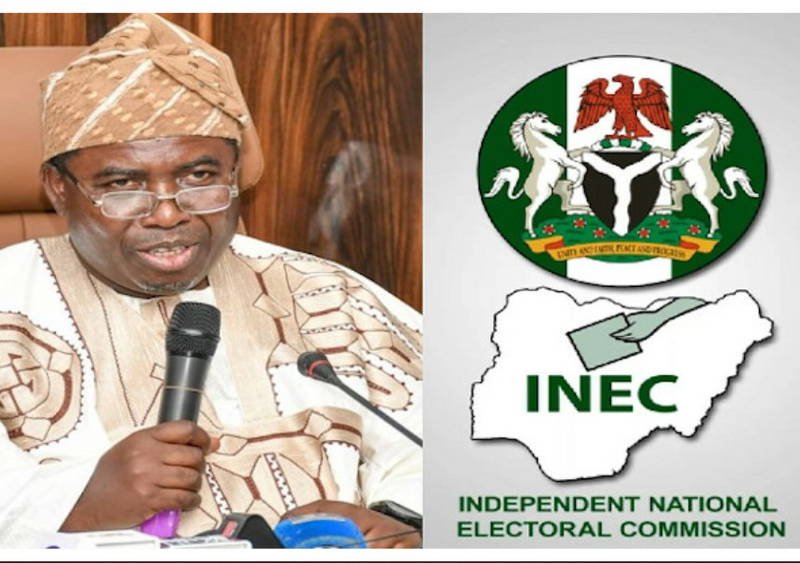
Nigeria’s presidential election result is determined through a structured collation process that begins at individual polling units and ends at the national collation centre in Abuja, where the Independent National Electoral Commission (INEC) declares the winner.
The process involves several layers of election officials, each responsible for collating, verifying and recording results submitted from the level below.
At the end of voting, the presiding officer at each polling unit accredits voters using the Bimodal Voter Accreditation System (BVAS), counts the ballots publicly and records the scores of political parties on Form EC8A, the official polling unit result sheet.
The presiding officer signs the form, while available polling agents are also expected to countersign it. A copy of the result, Form EC60E, is subsequently displayed at the polling unit to enable voters and other stakeholders to verify the figures.
Following the completion of polling unit activities, the results move through a series of collation centres before reaching the national level.
INEC’s former chairman, Mahmood Yakubu, explained during the 2023 presidential election that the process involved four major stages: ward, local government area, state and national collation.

At the ward level, the ward collation officer aggregates the polling unit results recorded on Form EC8A and transfers the figures to Form EC8B.
The process continues at the local government area level, where the LGA collation officer compiles the ward results on Form EC8C.
At the state level, the State Collation Officer for the Presidential Election (SCOPE) aggregates the results submitted from the various local government areas and records them on Form EC8D.
The 2023 presidential election result in Katsina State provides an example of the information contained in the form.
The state recorded 3,516,719 registered voters, 1,097,663 accredited voters, 1,058,673 valid votes and 32,514 rejected ballots.
Atiku Abubakar of the Peoples Democratic Party (PDP) secured 489,045 votes, narrowly defeating Bola Tinubu of the All Progressives Congress (APC), who polled 482,283 votes in the state.
The final stage takes place at INEC’s national collation centre in Abuja, where the commission’s chairman serves as the returning officer for the presidential election.
The position is currently occupied by Joash Amupitan, who succeeded Yakubu in October 2025.
During the 2023 election, Yakubu outlined how the national collation process would be conducted, explaining that the state collation officers would present the original copies of Form EC8D containing their respective state results.
After all the state officers have presented their figures, the returning officer displays the sealed copies of Form EC8DA, which contains the state-by-state summary, alongside Form EC8E, the presidential election declaration sheet.
Political party agents are then given the opportunity to make observations or raise objections before the final declaration.
After the declaration, duplicate copies of the relevant documents are made available to the agents.
Winning the highest number of votes nationwide is not the only constitutional requirement for becoming Nigeria’s president.
Under Section 134 of the 1999 Constitution, as amended, a presidential candidate must secure the highest number of valid votes cast and obtain at least one-quarter of the votes cast in not fewer than two-thirds of all the states of the federation and the Federal Capital Territory, where applicable.
According to the results announced by INEC, Nigeria had 93,469,008 registered voters, while 25,286,616 were accredited.
Of the votes cast, 24,025,940 were declared valid, while 939,278 were rejected.
Tinubu emerged with 8,794,726 votes, followed by Atiku with 6,984,520 votes. Peter Obi of the Labour Party (LP) secured 6,101,533 votes, while Rabiu Kwankwaso of the New Nigeria Peoples Party (NNPP) polled 1,496,687 votes.
However, the geographical spread requirement became a major issue during the legal challenges that followed the election.
In his final written address before the Presidential Election Petition Court, Tinubu’s lawyers argued that their client secured at least 25 per cent of the votes in 29 states.
They also claimed that Atiku met the requirement in 21 states, while Obi achieved it in 16 states and the Federal Capital Territory.
The figures were arguments presented by Tinubu’s legal team and not a separate declaration by INEC.
One of the most contentious aspects of Nigeria’s election process is the electronic transmission of polling unit results.
INEC uses its Result Viewing Portal, known as IReV, to upload polling unit result sheets for public viewing.
However, in its consideration of the legal disputes arising from the 2023 presidential election, the Supreme Court held that IReV was a public viewing platform and not the legally recognised system for conducting election result collation.
The court also ruled that failure to upload results to the portal could not, on its own, invalidate the election.
The Electoral Act 2026, signed by President Bola Tinubu in February, introduced revised provisions on electronic transmission.
Section 60(3) requires presiding officers to electronically transmit Form EC8A to IReV after completing polling unit results.
However, the provision also states that where electronic transmission fails because of communication difficulties, the duly signed Form EC8A remains the primary document for collation and declaration.
Senate Leader Opeyemi Bamidele has defended the provision, describing it as a mandate for electronic transmission.
Critics, however, argue that the exception for communication failure leaves room for manual collation to remain the controlling process.
As Nigeria prepares for future elections, the integrity of the collation process, the authenticity of result sheets and the responsibilities of electoral officers at every stage are expected to remain central to debates about electoral transparency.
Ultimately, every result must be traceable from the polling unit to the national collation centre, where the returning officer makes the final declaration.
Announcing Tinubu as the winner of the 2023 presidential election, Yakubu said the APC candidate had been elected president, having satisfied the requirements of the law.





How INEC Counts, Collates and Declares Nigeria’s Presidential Election Winner

Ozoro Curfew Relaxed To 10pm, Knock-Out, Unregistered Okada Banned After Cult Clashes

Oborevwori Cuts Warri Ring Road, PTI-Eku Road Timelines As Delta EXCO Approves N1.24trn 2027 Budget

Babcock 400-Level Student Alive After Viral Hostel Window Incident — Roommates Saved Him, Varsity Confirms

Pastor Tunde Bakare: I Told Tinubu I’m Too Old To Be A Minister

Oil Theft: Navy Arrests 259 Suspects, Recovers 7.48m Litres Of Stolen Products

2027: Makinde Dares Political Godfathers, Says God, Nigerians Will Give Him Presidency

Obasanjo Blames Leadership Failures for Nigeria’s Insecurity, Poverty, Mass Migration

50 Years Later, In The Same Hall Built For FESTAC ’77: Afreximbank Finally Puts Money Behind Film About FESTAC ’77

‘They Were Warned’: Delta Govt Says Asaba Death Could Have Been Avoided If NDC Had Not Ignored Police Advice

Minimum Wage: NLC Rejects FG’s 2027 Timeline, Demands Immediate Talks

Lagos Shuts Church After Resident Complains of Sleepless Nights, Threats

Omo-Agege Alleges Thugs Attacked NDC Campaigners In Asaba, Demands Arrest Of Organiser

Gidan Taba Massacre: Bandits Burnt Family Of 12 Alive After They Locked Door To Escape Abduction In Zamfara

Three Killed, Seven Injured in Two Separate Road Crashes in Ogun