FEATURED
HCSF Admits Due Diligence Failure as Reps Uncover Fake Documents Behind PFIPC Recruitment Waiver

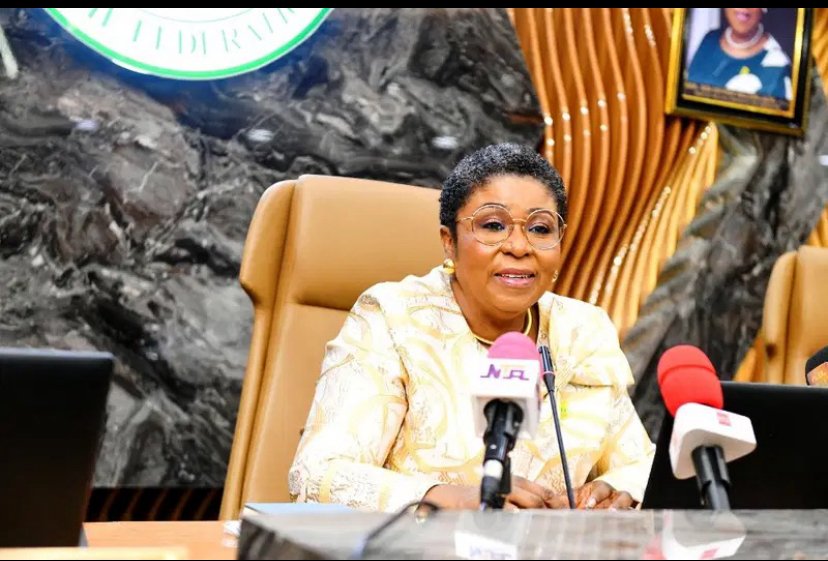
The Head of the Civil Service of the Federation (HCSF), Mrs. Esther Didi Walson-Jack, has admitted that her office failed to carry out adequate due diligence before approving an authorised establishment and recruitment waiver for the controversial Presidential Foreign Investment Promotion Council (PFIPC), an agency now under investigation for allegedly operating without legal backing.
Mrs. Walson-Jack made the admission on Wednesday while appearing before the House of Representatives Ad-hoc Committee investigating the alleged unlawful establishment of the Presidential Economic Advisory Council (PEAC) and the PFIPC.
The committee disclosed that its investigation had uncovered what it described as a coordinated scheme involving fake appointment letters, fabricated legislative documents and fictitious government offices allegedly used to obtain official approvals from key federal institutions.
Addressing lawmakers, the Head of Service acknowledged that her office acted on documents later discovered to be fraudulent.
“Having now reviewed all the facts and documents before us, we concede that we ought to have exercised greater due diligence before issuing the authorised establishment and recruitment waiver to the PEAC/PFIPC,” she said.
According to her, officials representing the purported agency attended the 2025 Annual Manpower Budget Defence with documents that appeared to establish the organisation legally, including what they claimed was an enabling Act of the National Assembly and a letter appointing a Director-General.

She explained that under established civil service procedures, newly created government agencies are required to present an enabling law, the appointment letter of the chief executive and other supporting documents before recruitment approvals can be granted.
Mrs. Walson-Jack noted that the approvals were processed in line with existing procedures based on the documents submitted, describing the incident as unprecedented.
“In almost 100 years of the Federal Civil Service, we have never encountered a situation like this. Criminals are always trying to stay ahead of law enforcement,” she said.
However, she admitted that after personally examining the documents, it became clear that the purported Establishment Act was not authentic.
“With nearly 30 years of legal practice, I immediately recognised that the document presented as an Act was not genuine,” she stated.
She also identified discrepancies in the appointment letter allegedly issued by the Office of the Chief of Staff to the President, saying the signature differed significantly from genuine official correspondence.
The committee chairman revealed that forensic analysis conducted by the Nigeria Police had confirmed the appointment letter was fake.
“The forensic report established that the signatures are completely different. There was not even an attempt to imitate the original signature,” the chairman said.
He further disclosed that investigators found the purported Establishment Act lacked essential features of a valid Act of the National Assembly, including citation numbers, Gazette references and official publication details.
“You acted based on false documents. The appointment letter is fake, and the so-called Establishment Act was fabricated,” the chairman told the HCSF.
Despite acknowledging the lapse, Mrs. Walson-Jack maintained that officials followed standard procedures based on the documentation presented to them.
She pledged comprehensive reforms to strengthen verification processes and prevent similar incidents.
“We take full responsibility and will review our processes to make them more resistant to fraud,” she assured.
Accountant-General’s Office Blames Individual Officer
The committee also questioned officials from the Office of the Accountant-General of the Federation over the issuance of an administrative code to the purported agency.
Former Director of Consolidation Account and Director of Federal Projects, Mr. Joshua Patmi Luka, defended the office’s procedures, explaining that the administrative code was officially addressed to the Permanent Secretary, State House, rather than directly to the agency.
He said the arrangement was intended to ensure that any irregularity would be detected before the code reached the applicants.
However, the committee faulted the process after discovering that the letter never reached the Permanent Secretary but was instead collected by the alleged fake Director-General.
The committee also revealed that the Directorate of Administration and Support Services referenced in the correspondence does not exist within the State House.
According to the chairman, had the letter reached the appropriate authority, the alleged fraud would likely have been uncovered much earlier.
Responding, Luka insisted the failure was not institutional but the result of an individual officer’s negligence.
“The problem was not with the office but with the officer responsible for dispatching the correspondence,” he said.
Police Explain Failure to Produce Suspect
The Inspector-General of Police, Mr. Olatunji Disu, represented by Deputy Commissioner of Police Olufemi Akinola of the National Cybercrime Centre, informed the committee that the alleged Director-General of the agency, Prince Adeniyi Matthew Adeyemi, could not be produced before lawmakers because he remains in lawful custody under a valid court order.
The police explained that complying with the committee’s request would require a production warrant issued by a court of competent jurisdiction.
While reaffirming the Nigeria Police Force’s commitment to cooperating with the National Assembly, the police maintained that it must also comply with existing judicial orders.
Heated Hearing
The public hearing was marked by tense exchanges between committee members and senior government officials.
Vanguard reports that the committee chairman repeatedly interrupted witnesses during questioning, limiting lengthy explanations as lawmakers sought to establish how multiple government institutions approved requests based on documents now confirmed to be fraudulent.
The committee said it would conclude the clarification phase of its investigation before releasing preliminary findings to the public next week ahead of submitting its final report to the House of Representatives after lawmakers resume from recess.








Ebola Outbreak: Scientists Urge Virtual Campaigns Ahead of 2027 Elections

Warri Mourns Uduaghan At Erowa/Umeh Empowerment, Gives N50k Grant To 200 Residents

FG Clears N100bn Gas Debts, Moves to Boost Electricity Supply

FG Woos Global Investors With World-Class Mineral Discovery In Kaduna Ahead Of Nigeria NOW! Summit

Tinubu to Kwankwaso at 70: Political Differences Won’t Diminish My Affection for You

‘Foreigners Now Beg for Nigerian Passports’, Says Dabiri-Erewa

Okubor To INEC: Introduce Course On How To Lose Election Without Losing Your Mind
Nigeria Confirms First Ebola Case as Deadly Bundibugyo Strain Hits Abuja

Prioritise Credibility, Profitability Over Traffic – Aniagwu Charges Online Publishers

Look Beyond Page Views To Build Profitable Media – DOPF Tells Online Publishers

Delta Police Arrest Three For Impersonating SGF Akume, Oborevwori’s Protocol Director To Defraud Community Leader Of N5.4m
Ebola Alert: 20 Key Facts As FG Traces 44 Contacts Over Suspected Case In FCT

I Never Asked Nigerians in Diaspora to Abandon Their Families — Peter Obi

‘If Buhari as a General Couldn’t End Insecurity, Spare Tinubu’ — Abdulaziz Yari

Tinubu Condoles With Ibori, Uduaghan Family Over Ex-Governor’s Death