
FEATURED
Alleged Fake Council: How the Gbajabiamila Controversy Became a Test of Tinubu’s Presidency

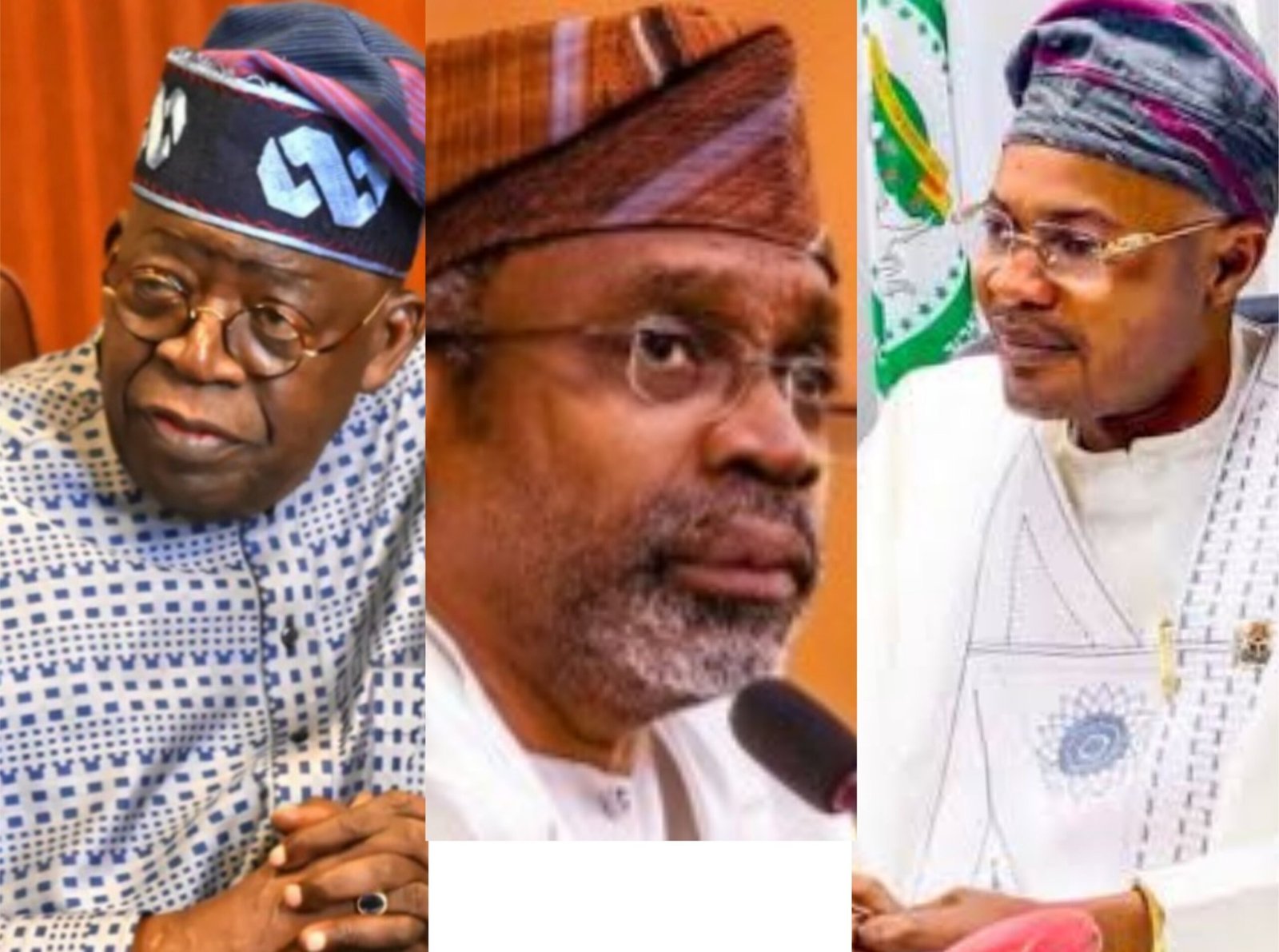
By Daniel Othegbemeh
A criminal case involving an alleged fake presidential advisory council has evolved into one of the most politically charged controversies facing President Bola Ahmed Tinubu’s administration. What began as allegations of forged appointment letters and impersonation has expanded into a broader debate about accountability, institutional oversight, and the credibility of Nigeria’s public institutions.
At the centre of the controversy is Prince Adeniyi Adeyemi, who claims he was legitimately appointed to head a presidential advisory body. The Presidency, however, insists that no such body existed, describing the appointment documents as forged and charging Adeyemi with offences including forgery, impersonation and obtaining by false pretence. As the matter proceeds before the Federal High Court, opposition figures, civil society organisations and governance advocates have questioned whether the scandal exposes deeper weaknesses within the Presidency.
The issue has become even more politically sensitive because of the involvement of the Office of the Chief of Staff to the President, headed by Femi Gbajabiamila. Documents presented by Adeyemi allegedly bear the authority of the Chief of Staff, while Gbajabiamila’s office has consistently denied issuing them. According to the Presidency, it was Gbajabiamila himself who alerted security agencies after complaints emerged about what officials describe as a fictitious presidential council.
That competing narrative has transformed what could have remained an ordinary criminal prosecution into a national political controversy. It is no longer simply a question of whether documents were forged. It is now a debate about how official-looking documents allegedly linked to one of the country’s highest offices came to circulate publicly, why they appeared credible to many people, and whether existing government safeguards are sufficient to prevent similar incidents.
The controversy has also drawn President Tinubu into the spotlight. Although there is no allegation that the President personally appointed Adeyemi or created the disputed council, critics argue that the Presidency must answer difficult questions about oversight, transparency and institutional accountability. Supporters of the administration counter that the government acted responsibly by reporting the alleged fraud, initiating investigations and allowing the judicial process to take its course.

The scandal has become even more politically charged following comments by Nigeria Democratic Party (NDC) presidential candidate Peter Obi, who described the episode as evidence of governance failure and called on President Tinubu to resign. The Presidency rejected Obi’s position, arguing that it was politically motivated and insisting that the administration itself uncovered the alleged fraud and referred the matter to law enforcement.
For many Nigerians, however, the controversy is no longer defined solely by the courtroom battle. It has become a broader conversation about public trust. Questions are now being asked about how official appointments are made, how government documents are protected, whether internal oversight mechanisms are effective, and whether political accountability should extend beyond criminal liability.
How the controversy unfolded
The dispute traces back to Prince Adeniyi Adeyemi’s emergence as the head of what he described as a presidential advisory body. Adeyemi publicly represented himself as Director General of the council and participated in activities that projected the organisation as an official arm of the Presidency.
The controversy escalated after officials reportedly raised concerns about the activities of the organisation. According to the Presidency, Gbajabiamila’s office petitioned security agencies in October 2025 after discovering documents allegedly bearing forged presidential authority. Investigations by the Nigeria Police and other security agencies followed.
The Federal Government subsequently filed criminal charges against Adeyemi and others, alleging forgery, impersonation and obtaining by false pretence. Prosecutors argue that the disputed council never existed and that official documents were fraudulently created to give the appearance of presidential approval.
Adeyemi rejects those allegations. He insists that his appointment was genuine, maintains that he possesses evidence supporting his claim and argues that the truth will emerge during the court proceedings. His defence has introduced a competing narrative that directly challenges the government’s account and ensures that the legal battle remains central to resolving the dispute.
As the case moves through the courts, the political debate has become increasingly intense. Beyond determining whether criminal offences were committed, the controversy has raised difficult questions about governance, institutional credibility and the standards of accountability expected from those who occupy the highest offices in government.
No figure has found himself more closely linked to the controversy than Femi Gbajabiamila, the President’s Chief of Staff. Although he is not facing criminal charges, his office has become central to the case because the disputed appointment letters and official documents allegedly bore his name or authority.
The Office of the Chief of Staff occupies one of the most influential positions in the Presidency. It coordinates presidential activities, supervises administrative processes within the Presidential Villa and serves as a major link between the President and government institutions. Because of that influence, any document appearing to originate from the office naturally carries considerable weight.
The Presidency has consistently maintained that Gbajabiamila neither appointed Prince Adeniyi Adeyemi nor authorised the establishment of the alleged Presidential Foreign Intervention Promotion Council (PFIPC) or Presidential Economic Advisory Council (PEAC). According to presidential spokesman Bayo Onanuga, the Office of the Chief of Staff was itself the complainant. The Presidency says that after receiving complaints from government agencies, Gbajabiamila petitioned security agencies in October 2025, requesting an investigation into what it described as forged appointment letters and the activities of an unauthorised body operating in the name of the Presidency.
Government investigators allege that their inquiries uncovered forged appointment documents, fake official seals and reference numbers, multiple bank accounts linked to the operation, and an office allegedly operating from the Federal Secretariat in Abuja. These allegations now form part of the criminal case before the Federal High Court and remain subject to judicial determination.
However, the government’s account is strongly disputed by Adeyemi.
Rather than admitting wrongdoing, Adeyemi insists that he was lawfully appointed and that the Presidency is attempting to distance itself from a process it once recognised. He has repeatedly argued that his appointment was known to senior government officials, including Gbajabiamila, and says he possesses documentary evidence to support his claims. He has denied forging documents, denied impersonating any public official and insists that the court proceedings will vindicate him.
One of Adeyemi’s most significant claims concerns the 2026 Appropriation Act. He argues that the agency he headed appeared in the federal budget with an allocation running into billions of naira. For critics of the government, this raises an obvious question: if the agency never existed, how did it allegedly find its way into a national budget approved through official government processes?
The Presidency has rejected Adeyemi’s interpretation, maintaining that the existence of a budgetary entry does not establish that the agency was lawfully created or recognised by government. Nevertheless, the budget issue has become one of the most debated aspects of the controversy because it extends the discussion beyond allegations of forged documents to questions about public financial management and institutional oversight.
Another allegation that has attracted public attention is Adeyemi’s claim that Gbajabiamila demanded money in connection with his appointment and the council’s proposed take-off grant. Gbajabiamila has categorically denied the allegation, and no public evidence or court finding has substantiated the claim. At this stage, it remains an allegation that has not been proven.
The legal dispute therefore revolves around two sharply contrasting narratives.
The prosecution argues that Adeyemi fraudulently created or operated fictitious presidential bodies using forged documents and official insignia to deceive members of the public and government institutions.
The defence argues that the appointments were genuine, that the councils were recognised, and that the government’s current position is an attempt to repudiate actions that had previously received official approval.
Ultimately, it is the responsibility of the Federal High Court not politicians, commentators or the media to determine which version is supported by the evidence.
Yet even before the court reaches its verdict, the controversy has already produced significant political consequences. It has intensified scrutiny of the Presidency, fuelled opposition criticism and raised wider concerns about the security of official government documents and the effectiveness of institutional checks designed to prevent the misuse of presidential authority.
These broader governance questions explain why the controversy continues to dominate political discourse long after it ceased to be merely a criminal case.
The controversy moved beyond the courtroom and into the political arena when Nigeria Democratic Party (NDC) presidential candidate Peter Obi weighed in. Describing the episode as a serious failure of governance, Obi argued that the allegations surrounding the disputed presidential council reflected a breakdown in accountability within the Tinubu administration. He went further by calling on President Bola Ahmed Tinubu to resign, contending that the President bears ultimate political responsibility for the actions and oversight of his administration.
The Presidency swiftly rejected Obi’s position, insisting that the call for resignation was politically motivated and ignored the sequence of events that led to the criminal prosecution. Government officials argue that it was the Presidency itself that alerted security agencies after discovering the alleged fraud, and that allowing the matter to proceed through the courts demonstrates respect for the rule of law rather than evidence of institutional failure.
The exchange between the opposition and the government illustrates why the controversy has become much more than a criminal case. It has become a contest over competing political narratives.
For the opposition, the issue raises difficult questions about transparency, oversight and the integrity of government institutions. Critics argue that if an individual could allegedly operate for months under the banner of the Presidency using official-looking documents, then the administration must explain how such a situation arose and whether existing safeguards are sufficient.
Supporters of the government, however, maintain that no system is entirely immune from fraud. They argue that what matters is whether institutions respond effectively once irregularities are detected. From that perspective, the investigation, prosecution and public denial of the alleged council demonstrate that the system ultimately functioned as it should.
Regardless of which political narrative proves more persuasive, the controversy has exposed broader governance issues that extend beyond the fate of any individual defendant.
One of those issues is institutional credibility. Public confidence in government depends heavily on the authenticity of official documents and the certainty that only authorised officials can speak or act on behalf of the Presidency. Allegations that forged appointment letters and official insignia could circulate widely enough to generate public confidence have inevitably prompted calls for stronger verification systems and greater transparency.
Another issue concerns public financial management. The debate over the alleged appearance of the disputed agency in the 2026 Appropriation Act has intensified scrutiny of Nigeria’s budget process. While the Presidency maintains that the agency was never officially created, critics argue that the reported budget allocation raises legitimate questions about how government records are prepared, reviewed and approved. Whether those questions point to administrative error, procedural weaknesses or something else entirely remains part of the wider public debate.
The controversy has also highlighted the distinction between legal responsibility and political accountability. A criminal court will determine whether the prosecution has proved the charges against Adeyemi beyond reasonable doubt. Political accountability, however, is judged differently. It concerns whether those entrusted with public office have maintained public confidence, exercised effective oversight and responded adequately to allegations that affect the integrity of government.
Several important questions also remain unanswered.
If the disputed councils were never officially established, how did they allegedly acquire enough credibility to attract public attention and reportedly interact with institutions? If the documents were forged, what weaknesses allowed them to circulate? If Adeyemi insists his appointment was genuine, what evidence will he present to support that claim? And if there were failures within administrative processes, what reforms are needed to prevent similar controversies in the future?
Those questions cannot yet be answered conclusively. They will depend on the evidence tested before the Federal High Court and any further information that emerges during the proceedings.
For now, one fact is beyond dispute: the controversy has become a significant political challenge for the Tinubu administration. It has drawn the Presidency, the Office of the Chief of Staff, the opposition and civil society into a wider debate about governance, accountability and public trust.
Whether the case ultimately ends in conviction, acquittal or another legal outcome, its broader impact is already evident. It has reminded Nigerians that the strength of democratic institutions is measured not only by how they exercise power, but also by how they respond when that power is questioned.
Othegbemeh, a public affairs analyst writes from Abraka




Former Power Minister Mamman Loses More Assets to FG After 75 Years Jail Sentence

Alleged Fake Council: How the Gbajabiamila Controversy Became a Test of Tinubu’s Presidency

Merino’s Late Strike Sends Spain Past Portugal into World Cup Quarter-finals

Delta Police Launches Statewide Operation to Prevent Cult-related Violence Ahead ‘7/7’

Fake News Threatens Democracy, Gov Idris Tells Journalists at Arewa Media Summit

Shettima, Okonjo-Iweala, Brazilian, Chinese Investors Set For Delta Summit

Tinubu Unveils AI Security Strategy, Pledges Modern Nigerian Army to Combat Insecurity

Tinubu Rejects Judiciary Interference Claims, Says FCT TSA Exit Boosted Project Delivery

Obi Criticises Tinubu Over Oyo School Kidnapping, Questions President’s Response

Nigeria’s Youngest Chartered Accountant, 16-Year-Old Osasere Okundaye, Shares Inspiring Journey to ICAN Success

Isoko North Boss Bans Illegal Vigilante Group, Imposes Curfew on Commercial Motorcycle

BAD GOVERNANCE IN NIGERIA: A THREAT TO NATIONAL DEVELOPMENT

US to Closely Monitor Nigeria’s 2027 Elections, Warns of Tougher Conditions for Bilateral Ties

FG Denies ₦8tn ‘Shadow Budget’ Claims, Says All Spending Backed by Law
