
FEATURES
2027 Presidency: Court Gives Atiku 7 Days to Serve Tinubu Suit

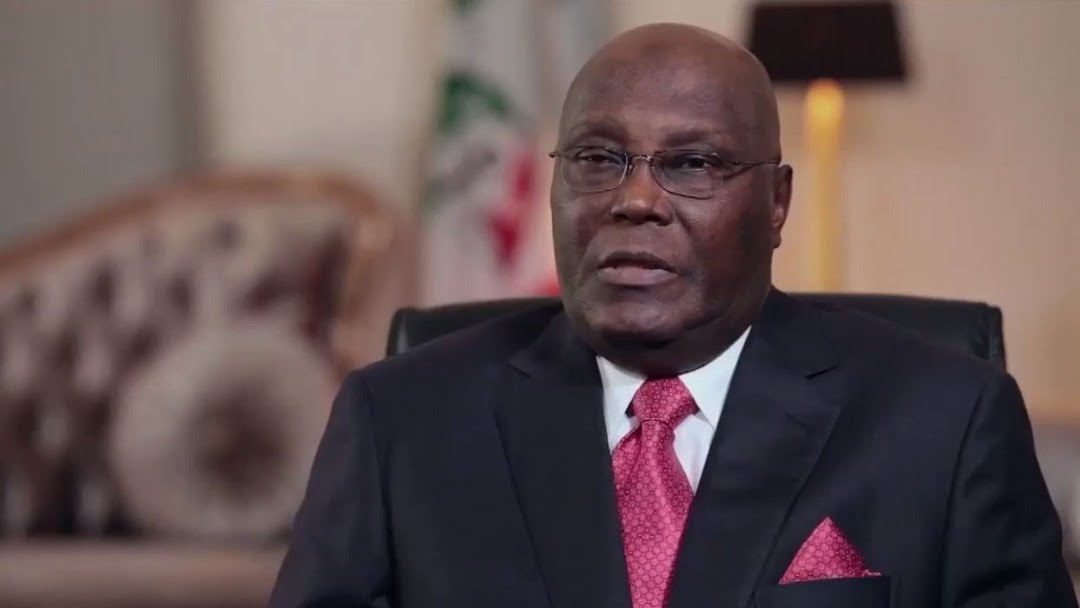
The Federal High Court sitting in Abuja has ordered that President Bola Tinubu be served within seven days with a suit filed by former Vice President Atiku Abubakar challenging his eligibility to contest the 2027 presidential election.
Justice Inyang Ekwo granted an application for substituted service, directing that the court processes be served on Tinubu through his political party, the All Progressives Congress (APC).
The order followed an application moved by Atiku’s counsel, Olanrewaju Omotayo-Ojo, who appeared in place of Silas Onu.
The suit, marked FHC/ABJ/CS/1888/2026, was instituted by Atiku, the presidential candidate of the African Democratic Congress (ADC), with the ADC as the second plaintiff.
Tinubu, the APC and the Independent National Electoral Commission (INEC) are listed as the first, second and third defendants respectively.
Atiku is challenging Tinubu’s eligibility on the basis of an alleged forged National Youth Service Corps (NYSC) discharge certificate which, he claimed, was submitted to INEC as part of the documents used to establish the President’s qualification for the 2023 presidential election.

In a 25-paragraph affidavit personally deposed to in support of the suit, Atiku alleged that the certificate bears the name “Tinubu Bola Adekunle”, which he said does not correspond with the President’s name.
Atiku further alleged that the document had been in INEC’s custody and was presented as genuine despite what he described as discrepancies in the name.
The former Vice President is relying, among other provisions, on Section 137(1)(j) of the 1999 Constitution, which provides for disqualification where a person has presented a forged certificate to INEC.
He is asking the court to determine whether Tinubu and the APC should be disqualified from participating in the 2027 presidential election over the alleged submission of the disputed certificate.
The plaintiffs are also seeking a declaration that Tinubu breached the Constitution when he allegedly presented the certificate during his 1999 governorship bid in Lagos State.
The court has fixed September 28, 2026, for further proceedings in the matter.
Meanwhile, INEC has challenged the competence of the suit and urged the court to dismiss it.
Tinubu and the APC have also opposed the action. In a counter-affidavit filed on their behalf, they denied submitting any forged certificate to INEC for either the 2023 or 2027 presidential elections.
Their legal team has further argued that the plaintiffs lack the legal standing to challenge Tinubu’s candidacy and that the suit is statute-barred and incompetent.
Counsel to Tinubu, Chief Akin Olujinmi, SAN, argued that allegations of forgery are criminal in nature and must be established in accordance with the applicable standard of proof. He also contended that the plaintiffs had not produced evidence from the NYSC denying the issuance of the disputed certificate.
Another Senior Advocate of Nigeria, Chief Wole Olanipekun, SAN, has also filed processes identifying himself as counsel to Tinubu and challenging the suit.
In a letter dated September 10 to the Deputy Chief Registrar of the court, Olanipekun said he had been briefed by the President to lead a team of lawyers to represent him in the matter.
The lawyer complained that Tinubu had not been served with the originating processes and requested copies of the documents to enable the President to respond to the claims.
Atiku and the ADC have also sought the court’s permission to amend portions of their originating processes after identifying errors in the description of some INEC forms. They said the relevant document had been referred to as Form CF001 instead of Form EC9A, and also sought to provide additional particulars and clearer copies of exhibits.
The court’s determination of the substantive issues will decide whether the claims and objections raised by the parties have legal merit.



2027 Presidency: Court Gives Atiku 7 Days to Serve Tinubu Suit

Veteran Nollywood Actor Olu Jacobs Dies at 84, Family Announces

2027: ‘I’m Answerable to Tinubu Only and Not Politically Lazy Governors’ – Wike Blows Hot

2027: APC Governors, Wike Clash Over ‘Rainbow Coalition’

Dear Dangote, Before Asking Nigerians to Invest, Make Things Cheaper

Opinion: A Mighty General Has Returned Home – Tribute to Fr. Anthony Mario Ozele

Renowned Catholic Priest Fr. Anthony Mario Ozele Dies at 60

Rainbow Coalition: Wike, APC Governors Backing Tinubu in Different Ways — Fayose

Police Raise Security Alert Over Planned Terror Attacks on Schools, Churches, NYSC Camps

Delta Police Dismantle Shrine Used by Suspected Criminals for Fortification in Ndokwa West

Two Shot Dead by Bandits While Inspecting Land in Imo

Photo: Desmond Elliot Kneels to Tinubu’s CoS Gbajabiamila, Apologises Over Surulere APC Primary Loss

Plateau Attacks: 13 Killed as Gunmen Open Fire on Passengers, Communities
Dangote Refinery N2.15tn IPO on NGX: What to Know About NGX Listing in 2026
