OPINION
CAN ATIKU-OBI UNSEAT TINUBU-SHETTIMA IN 2027?, BY YUSHAU A SHUAIB

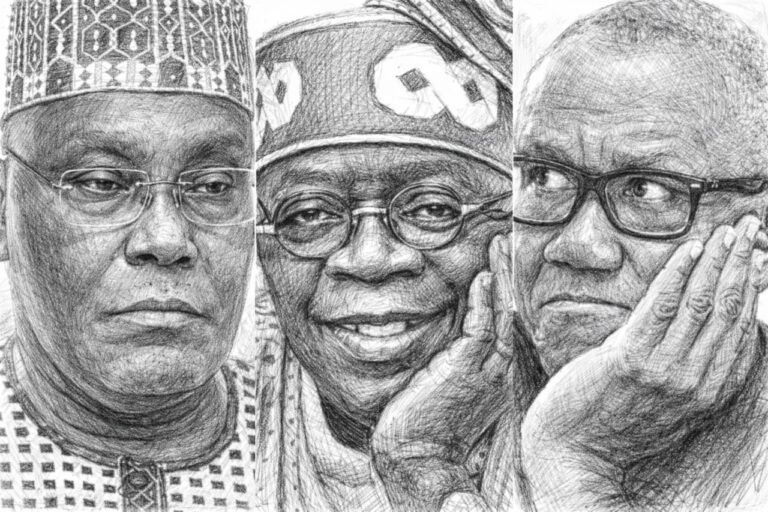
Nigeria’s political landscape is gradually heating up ahead of the 2027 general elections. Yet, beyond permutations of power, recent personal encounters have exposed a deeper concern—how dangerously our national discourse is drifting toward divisive narratives of religion and ethnicity.
Recently, I confronted a disturbing social media post by a purported Northern Muslim denigrating Jesus over political provocation. As a devout Muslim, I condemned the post unequivocally. Such conduct is not only irresponsible but fundamentally contradicts Islamic teachings. The Holy Qur’an accords profound respect to Christians and Jews, and to their scriptures, while honouring Jesus as the Messiah and the Word of God.
In urging restraint, I appreciated the solidarity shown by members of the Christian community and reminded both faiths that they share far more in common than what divides them. Yet, within hours, another troubling episode emerged. A Nigerian-born commentator based in America, Ejike Okpa, posted Facebook content portraying Muslims as terrorists. As a friend, I simply responded: “I am a Muslim, not a terrorist.” The reactions and comments that followed, especially from those I often referred to as ‘Werekaci’ were unsettling and disgusting—and it raised a fundamental question: will religion and ethnicity shape the political choices of the next generation as we approach 2027?
It was against this backdrop that I joined the Editor of Economic Confidential, Abdulrahman Abdulrazaq, in the inaugural PRNigeria “Journalist vs PR Strategist” podcast debate on whether an emerging opposition coalition could unseat an incumbent administration. While my colleague is an avowed supporter of President Bola Ahmed Tinubu, I deliberately adopted a balanced position—grounded in facts and objective analysis.
At the centre of current political calculations is the African Democratic Congress (ADC), which is evolving into the most formidable opposition alliance, similar to a coalition that eventually produced the All-Progressives Congress (APC), with Muhammadu Buhari as its presidential candidate. It was the coalition that ultimately unseated the then‑ruling Peoples Democratic Party (PDP) under President Goodluck Jonathan in 2015.
The irony is striking. Several of the very architects of that 2015 APC triumph — Atiku Abubakar, Rabiu Kwankwaso, Nasir el-Rufai, Rotimi Amaechi, Aminu Tambuwal, Rauf Aregbesola — have now converged on the ADC to challenge the very man whose political machinery was central to that historic victory: Bola Tinubu.
History offers perspective. The 2015 Buhari’s APC coalition secured about 15 million votes (53%), defeating Jonathan’s 12 million (44%). It was a coalition built on strategy, shared grievance, and disciplined unity.
By contrast, the 2023 election was the most competitive since 1999. Tinubu won with 8.7 million votes (36.61%). Atiku Abubakar secured 6.9 million (29.07%). Peter Obi (Labour Party) garnered 6.1 million votes (25.40%), while Kwankwaso (NNPP) obtained 1.4 million votes (6.23%). Notably, the top three candidates each won 12 states, while Kwankwaso secured only Kano State.
Although Tinubu, who chose Senator Kashim Shettima as his running mate, met the constitutional threshold of 25% in at least 24 states, the geography of the vote revealed a fragmented mandate. Tinubu dominated the Southwest and parts of the North-Central, but Peter Obi achieved the unthinkable by defeating the incumbent in his Lagos stronghold, sweeping all the southeastern states and FCT. Meanwhile, Atiku Abubakar cleared most of the Northeast and Northwest.
More significantly, the combined votes of Atiku, Obi, and Kwankwaso exceeded 15 million—nearly double Tinubu’s tally. On paper, this arithmetic presents a compelling case for a unified opposition. Together, they commanded electoral strength across more than 25 states—enough to satisfy constitutional requirements. But elections are not won on arithmetic alone.
The real challenge lies in unity, ego management, and coalition discipline. Nigerian political history is replete with alliances that collapsed under the weight of personal ambition. The same forces that could make the opposition formidable could also render it fragile.
The 2023 experience is instructive. Obi’s refusal to serve as a running mate and Atiku’s miscalculation in overlooking Nyesom Wike as his deputy weakened the opposition and accelerated the fragmentation of the PDP—a party that once governed Nigeria for sixteen years.
While an Atiku–Obi alignment may constitute the most formidable opposition configuration against the Tinubu–Shettima ticket, alternative permutations are likely to be politically unviable or suicidal.
While an Atiku–Obi alignment would represent the strongest opposition configuration against the Tinubu–Shettima ticket, alternative permutations may amount to political futility or suicidal.
While the opposition coalition is anchoring its campaign on prevailing insecurity and socioeconomic instability, President Tinubu’s administration has taken steps to address political sensitivities.
Northerners occupy key security positions, including the Defence Ministers and the National Security Adviser, while prominent Christians head major economic institutions, including the Finance Ministers and the Central Bank Governor—moves widely interpreted as efforts to balance concerns arising from the Muslim-Muslim ticket.
The administration’s revenue reforms — particularly through the Nigeria Revenue Service (NRS) — have also increased allocations to subnational governments via the Federation Account Allocation Committee (FAAC). Similarly, Nigeria’s measured diplomatic response to external pressures, including reckless remarks by U.S. President Donald Trump on alleged religious persecution, averted unnecessary geopolitical escalation seen in countries such as Venezuela and Iran.
Yet, beyond governance, the power of incumbency remains decisive. Control of institutions, influence over political structures, and access to state resources often shape electoral outcomes beyond public sentiment.
Equally concerning is the growing intrusion of ethnoreligious sentiment into political discourse. Supporter groups across party lines have, at times, resorted to divisive rhetoric that undermines national cohesion. If unchecked, such narratives risk overshadowing critical debates on the economy, security, and governance.
There is also the question of external influence. Claims that foreign actors could shape Nigeria’s electoral outcomes should be approached with caution. Global experience suggests that domestic realities ultimately prevail.
For both the ruling party and the opposition, the lessons are clear. If the opposition fails to consolidate, history may repeat itself. Similarly, if the ruling party becomes power drunk or tampers with its winning formula, it could also face unexpected consequences. In the end, 2027 will not merely be a contest of candidates—it will be a test of democratic maturity.
The gladiators on both sides would do well to study history. Nigeria has seen this script before—and the ending is rarely flattering.
Yushau A. Shuaib is the author of “An Encounter with the Spymaster.” Email: yashuaib@yashuaib.com


N’Assembly Clerk Warns Against Lobbying for Promotions, Cites Risk of Legal Battles
Police Rescue One-Month-Old Baby Allegedly Sold for N2m in Oyo, Arrest Mother, Clinic Owner

CAN Honours Oborevwori With Christian Icon Award At 50th Anniversary

Buhari Offered to Back Osinbajo’s Presidential Bid Four Times, Akande Counters Babachir Lawal

DOPF 2026 Conference: Oborevwori To Attend As Obukoadata, Chiazor, Imegwu Lead Panel In Asaba

Oborevwori’s CPS Ahon Meets New Delta NUJ Exco, Calls For Closer Synergy With Government

Full List: Tinubu Nominates 4 New INEC Commissioners, 2 RECs — See Names, States

NNPC Confirms Rivers Pipeline Explosion, Residents’ Homes and Businesses Damaged

Police Raid Cult Anniversary Party in Asaba, Arrest 95 Suspected Cultists, Recover Pump-Action Guns

Aircraft Loses Door Minutes After Take-Off From Abuja, Makes Emergency Landing

Umahi Orders Reconstruction Of Benin-Asaba Highway, Reopens First Niger Bridge With CCTV, Solar Lights
Minimum Wage: NLC, FG Clash Over Timing of Fresh Wage Review

Yahaya Bello Fraud Trial: BDC Operator Reveals How N1.425bn Was Used To Pay Bello Children’s School Fees At AISA

Dokubo-Asari To Be Crowned Amanyanabo Of The Source Dec 19, As Tonye Princewill Chairs Coronation Committee

Ebenco Refinery Gets NMDPRA Approval To Introduce Hydrocarbons, Advances To Commissioning