
BUSINESS
NOGICD: Sen. Joel-Onowakpo Reads Riot Act to IOCs, Others, Reaffirm Tinubu’s Nigeria First Policy

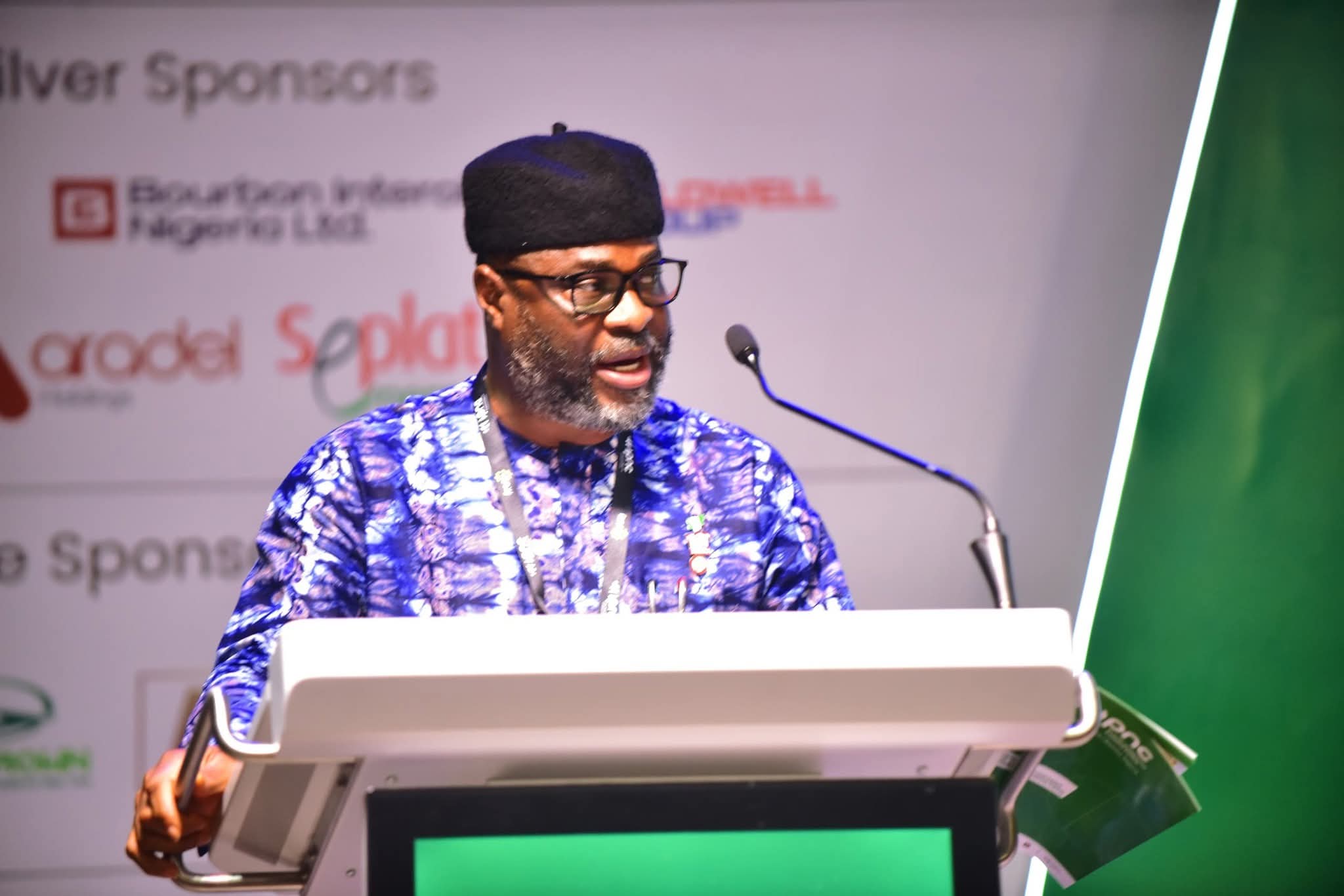
Senator Joel-Onowakpo Thomas, the Chairman, Senate Committee on Local Content, has warned all International oil companies (IOCs) and other multinational firms operating in the country to abide by the Nigerian Oil and Gas Industry Content Development (NOGICD) Act or would henceforth be sanctioned accordingly.
Senator Joel-Onowakpo gave the warning while presenting his address at the 14th Annual Practical Nigerian Content (PNC) Forum, held in Yenagoa. Bayelsa State, on Tuesday.
He reaffirmed his committee’s unwavering support to President Bola Ahmed Tinubu’s commitment to the Nigeria First Policy.
According to him, the policy projects Tinubu’s empowerment of Nigerian workers, the expansion of decent job opportunities, and the localisation of economic benefits across the oil and gas sector as well as science, engineering, and broader industrial sectors.
The theme of this year’s gathering “Securing Investments, Strengthening Local Content, and Scaling Energy Production” could not have come at a more critical time, he added.
Senator Joel-Onowakpo, noted that as the legislative oversight body driving compliance with the NOGICD Act, Executive Order No. 5 and the Nigeria First Policy, they were intensifying efforts to ensure that Nigerians are not bystanders but key players and beneficiaries in their own economy.
The Senator who represents Delta South Senatorial District, maintained that Nigerian welfare stands at the centre of the Renewed Hope Agenda of President Tinubu.
Relying on the mandate of the Committee as stipulated in Order 96 of the Senate Standing Orders (2023), he reiterated that the committee will work hard to create an enabling environment that fosters the growth of businesses, promote job creation and develop critical assets and skills.
He said that the Nigerian Content Development and Monitoring Board (NCDMB) plays a vital role in achieving the intent of the NOGICD Act 2010.
“It is a privilege to join you at this year’s Practical Nigerian Content Forum, a gathering that has matured into the central marketplace for ideas, collaboration, and accountability in the Local Content ecosystem.
“I thank the Nigerian Content Development and Monitoring Board for sustaining this platform and for inviting stakeholders to deepen a dialogue that is essential to our nation’s industrial future.
“I am very happy because this years discourse intends to address the gap in local content development in Nigeria but sadly, that after 65years of the discovery and exploration of crude oil in nigeria and after the enactment of the NOGICD act in 2010, we are still way way behind.
The NOGICD Act of 2010, he said is one of the most transformative laws for economic nationalism, aims to ensure that Nigerians are prioritised in employment, procurement, and service delivery.
Quoting Sections 28 to 37 of the Act, Joel-Onowakpo, affirmed that operators are mandated to submit and implement employment and training plans that ensure Nigerian nationals occupy roles across all levels—junior, intermediate, and management.
Senator Joel-Onowakpo noted that one of the most abused areas of compliance has been Human Capital Development (HCD).
“The NOGICD Act mandates that 1%–3% of the value of every oil and gas project above $1 million must be dedicated to capacity development for Nigerians.
“This provision is not decorative. It is not aspirational. It is not voluntary.This is how nations build the engineering, fabrication, welding, geological, and high-technology expertise needed for the future.
He frowned at the recruitment of an expatriate as director of procurement, a position previously occupied by Nigerian in Chevron Nigerian Limited, just as he lamented Sahara Group’s refusal to comply with the law by remitting the 1% for the Human Capital Development of local capacity.
On workers’ welfare, skills, and sustainable livelihoods the Senator, said the Committee’s commitment is not limited to employment numbers but are equally interested in improving the welfare, workplace safety, and long-term career viability of Nigerian workers.
“Sections 35 to 39 of the NOGICD Act mandates operators to invest in training, research, and human capital development. These provisions are not ornamental—they are actionable legal standards.
“All operators… shall employ only Nigerians in their junior and intermediate cadre…” (Section 35)
“An operator shall carry out a programme and make expenditure… for the promotion of education, attachments, training, research and development in Nigeria…” (Section 37)
“Over the past months, the Senate Committee on Local Content has taken decisive action. We have written to operators — IOCs and other oil and gas companies and the NCDMB — demanding full disclosure and submission of critical information and documents. Where there are gaps, inconsistencies, or red flags, we will summon operators and regulators. Where investigative hearings are necessary, we will conduct them.
“Work has commenced — and let me assure you — we will not let up. We are also collaborating with Nigeria Labour Congress to address these abuses and shame companies who are willfully undermining and shortchanging Nigerian citizens from benefiting from the intent of all the laws and Presidential Executive Orders,” he stated


RE: EQUITY, NOT EASTERN/WESTERN URHOBO DIVIDE, SHOULD DECIDE ROTATION, BY JUSTICE IYASERE

EFCC Warns Banks Against Unsecured Loans

Waive Is Our Choice; Any Other Endorsement Is Invalid — Urhobo Clergymen

Police Disrupt Initiation Activities, Arrest Female Cultist, Three Others in Delta

Controversies Trail Okowa’s 2027 Senate Bid

2027: Okowa Begins Senate Comeback Bid, Accepts Calls to Run Again

NUJ Warri Hails Enduring Legacy of Tompolo at 55

Tompolo at 55: DOPF Eulogies a Champion of N’Delta Struggle, a Stabilising Force

Delta Police Recover Vehicle Used in Sapele Council Chairman’s Kidnapping at Ogorode Waterside, Intensify Manhunt

Oborevwori Felicitates APC Natl. Publicity Secretary, Felix Morka at 61

Police Expose 17-Year-Old Hacker Who Hacked Celeb Accounts and Sold Explicit Content in Delta

Delta Governor Congratulates Tompolo at 55, Hails Impact on Increased Oil Production

Nwoko Pays Glowing Tribute to Late Senator Mpigi, Describes Him as Exemplary Public Servant

Eyes on Badenoch as FG Orders Deactivation of Passports of Citizens Who Renounce Nigerian Nationality
