FEATURES
If They Can Say Croissant, They Can Say Amala

By Emojevu Ejiroghene Merit
“It’s bean cake,” the Nigerian quickly corrected himself after saying “Akara.” The Foreigner nodded at him while he smiled. Yet somewhere between the correction and the smile, a piece of cultural esteem has been traded for abstract acceptance.
The “modernization syndrome,” as I would like to call it, has eaten deep into the roots of Africa’s cultural confidence. It is the tendency to abandon, dilute, or edit indigenous identity in pursuit of foreign acceptance. We act like it isn’t an elephant in this ‘wide green continent’ of a room. It is often celebrated as a sign of progress, global relevance, and global acceptance. Yet, beneath its attractive promise lies a subtle tendency to make people view their own heritage through foreign eyes.
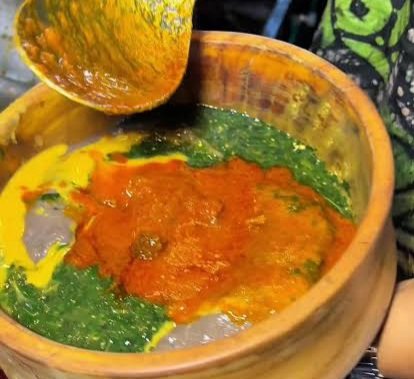
In Africa, particularly in Nigeria, we no longer find comfort in our indigenous terms. We have learned to coin or disguise our names in a bid for global acceptance. We rename our indigenous meals for foreign recognition. The people who own the culture are often now the first to rename it. We act as though the fate of international communication now depends on replacing Akara with bean cake. We act like multinational recognition now lies on Oghenefegor westernizing his name to “Fegs,” just so his white boss at work can pronounce it. Amala is now “Yam paste,” our renowned Egusi soup is now “Melon seed soup”, and Moi moi is now “Steamed bean pudding.”
Avwerosuoghene now has to be “Suo” for it to gain acceptance, Towuoritse is now “Towulistic” and the Foreigner will rather demand a shortened form like “Jay Jay” than spare any effort to learn Diedjomaphiyo. The young adolescent would rather answer to Jayden in school than ever let his other name, Kosisochukwu, be used for anything other than his certificates. A parent who doesn’t give his child an English name is now seen as one who does not really care about his child’s future. Because the future has now been quietly tied with a global acceptance that comes at the expense of unnecessary modernization and adjustment. I know of a guy whose original surname was Mebaganduaran but due to the name being too ‘hard’ for a certain white man to pronounce, an ancestor customized it to “Dudu”, and now generations down to his own now bear ‘Dudu’ as a surname.
But we effortlessly learn to say “Worcestershire,” “charcuterie,” and “hors d’oeuvre” without demanding that their owners simplify them for us. We bite our tongues learning words like “Neuroplasticity,” “Electroencephalography,” and “photosynthetically” even though English was never our first language. We memorized epistemology, mastered entrepreneurship, and learned to pronounce “coup d’etat” yet we hesitate to introduce Amala by its own name. We stretch our tongues around bouillabaisse and bourgeoisie, but shrink them before Akamu and call it “Pap.” Forgetting that if a Nigerian child can learn “Electroencephalography” in a sentence, surely a foreigner can learn “Amala” at a dinner table. We learn theirs, and we should expect them to learn ours too. But when did our culture become too difficult for the world to learn?

This modernization syndrome can be linked to the country’s colonial history which has, over time, birthed the assumption that foreign culture is superior. It has cast a shadow over us like a complex hangover from British colonialism and it’s in deep contrast with Nigeria’s booming indigenous creative industries and resilient local traditions.
This is manifesting in our language, identity, consumer preferences, and even our introduction and representation of our culture. This cultural inferiority complex now makes us misplace cultural priorities. After all, why would we want to modernize Amala to “Yam paste” in our menus right here in our indigenous communities if not that we feel our own names and terms aren’t as standard as the ones we can adapt from the west. All this unnecessary modernization stems from our desire for global acceptance.
Progressively, it will be paramount to know that it transcends just changing the name of our food and snacks, it is beyond modernizing and westernizing our names. It is a cultural exchange. Our names carry history, our language carries identity and the names of our food preserve culture. We may not know but renaming cultural items can gradually erase uniqueness. Modernization is a silent thief stealing our cultural confidence and we watch our indigenous names disappear like footprints in beach sand. Our culture cries out in agony every time its name is replaced because trying to make our culture digestible to others, we may be swallowing our indigenous pride.
I acknowledge that most times explanations help communication and translating a food’s ingredient isn’t all that wrong but explanation should accompany the original name, not replace it. You could say: “Amala, a traditional Yoruba meal made from yam flour.” This preserves culture and presents it in its original form without subjecting it to any form of unnecessary modernization. It should be known that we can actually carry our identity into a global world without first translating it to something more acceptable.
In conclusion, the modernization syndrome is a ticking time bomb that will soon explode. And when it does explode, we will recognize that it is a different kind of bomb — one that does drastic damage destructively even before its deafening sound is heard. We should not pronounce “charcuterie” with confidence, yet apologize for “Avwerosuoghene” before anyone even asks what it means. A tongue that can conquer “Worcestershire” should not stumble over “Akpevweoghene.” If the world can learn Croissant, cappuccino, and rendezvous, it can certainly learn Amala. The real question is whether Nigerians themselves still believe Amala deserves to be pronounced.




Blackout: Police Storm BEDC HQ in Benin, Arrest NUEE Officials Over Strike
NUJ Urges Delta Govt To Sustain Uduaghan’s Legacies As Oborevwori, Okowa Visit Widow

2027: ‘Rig And Die’ — Omo-Agege Warns Against Vote Manipulation In Delta

Delta Govt Approves N4bn Empowerment For 15,000 Indigents

Army Deploys 600 Soldiers to India for Jungle, Mountain Warfare Training

2027: Court Fixes Nov. 24 For Judgment On Suit Challenging Omo-Agege’s NDC Ticket

11 Years After, Grant Ecosystem Group Writes Tinubu Over Outstanding Grant Payments

Okowa: Delta’s Mass Defection To APC Must Reflect In 2027 Votes

2027: Take Tinubu’s Reforms To Market Women, Youths — Oborevwori Tells Delta APC

You Can’t Retire The Man Who Made You Senator – Group Blasts Dafinone Over Wizards Comment

Veteran Nollywood Actor Francis Duru Is Dead At 57

Ebola: FG Warns 15 States to Fast-Track Preparedness as Hospitals Ready Isolation Beds

FCT Police Arrest Suspect in Lexus SUV With Fake ‘PRESIDENCY’ Number Plate in Abuja

Okowa Pays Condolence Visit To Uduaghan Family, Says Death Deeply Felt

DOPF 2026 Lecture: Oborevwori, Okubor, Dafinone Demand Credible Elections Ahead Of 2027