FEATURED
South Africa’s Xenophobia Betrays Mandela’s Legacy , Says Tuggar

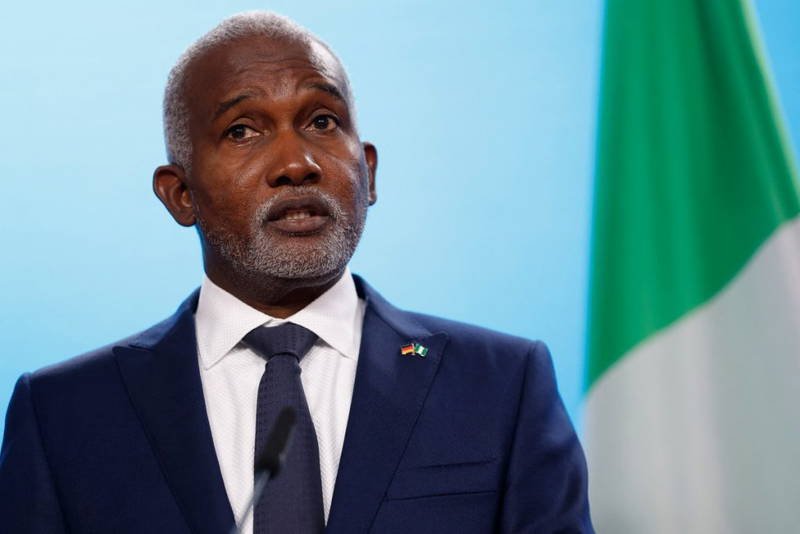
Former Minister of Foreign Affairs, Yusuf Tuggar, has condemned the targeting of Nigerians and other black Africans in South Africa, describing the hostility as a betrayal of the Pan-African ideals championed by the country’s late former President, Nelson Mandela.
Tuggar said it was unacceptable that Africans who supported South Africa’s struggle against apartheid were now facing discrimination, intimidation and hostility within the same continent.
He spoke on Thursday at the 2026 end-of-year event of The Bridge Club, held at the Continental Hotel in Lagos, where he served as chairman of the occasion. Renowned Kenyan scholar and Pan-African advocate, Prof. P.L.O. Lumumba, delivered the keynote address.
The former minister warned that the growing hostility towards Nigerians and other African nationals threatened the foundations of Pan-Africanism and undermined efforts to achieve continental unity and shared prosperity.
Recalling Nigeria’s contributions to the liberation of Southern Africa, Tuggar said the country committed significant financial resources and diplomatic support to the fight against apartheid and minority rule.
He noted that Nigeria provided scholarships and assistance to victims of apartheid, particularly South African students who survived the 1976 Soweto massacre.

He also highlighted Nigeria’s support for liberation movements and independence struggles in Namibia, Angola and other African territories affected by colonialism and racial discrimination.
Tuggar said his generation grew up embracing the ideals of African liberation, making the present treatment of Nigerians and other black Africans in South Africa difficult to understand.
He said, “These are but a very few of the reasons why Nigerians cannot fathom why they and other black Africans are being targeted in South Africa.
“Call it Afrophobia, which may be a better description than xenophobia, as non-black Africans appear to be exempted, or the more euphemistic framing of anti-migration protests; it is wrong and must be condemned.”
He stressed that the hostility was emerging at a time when African countries should be strengthening their relationships to improve their collective economic power and influence in global affairs.
The former minister called for the condemnation of attacks against Africans while urging stakeholders to understand the historical factors contributing to discrimination across the continent.
He attributed the persistence of prejudice and segregation in African societies partly to colonial policies and the apartheid system, whose psychological and social consequences, he said, continued to influence relationships among communities.
Tuggar advocated stronger institutions, historical awareness and intellectual engagement to challenge attitudes capable of undermining African solidarity.
He also argued that Pan-Africanism must translate into practical economic policies, particularly industrialisation and the removal of trade barriers among African countries.
According to him, Africa cannot achieve genuine economic independence while continuing to export raw materials and depend on other regions for manufactured goods.
Referencing the contributions of Nigerian development economist, Adebayo Adedeji, and other African thinkers, Tuggar said industrialisation, regional economic cooperation and the establishment of an African Economic Community remained critical to the continent’s development.
He identified the African Continental Free Trade Area (AfCFTA) as a major framework for achieving these objectives through expanded trade, industrialisation and the movement of goods and services.
Tuggar maintained that the free movement of workers was equally important to the success of continental economic integration.
He said, “The path to Pan-Africanism is through the continental free trade area.
“As the father of capitalism, Adam Smith, once opined, the free circulation of labour is the foundation of any free trade system.”
The former minister also expressed concern over the possible involvement of external interests in promoting anti-migrant campaigns, calling for closer scrutiny of the organisations and funding behind such activities.
He warned that Nigeria and South Africa must not allow xenophobic attacks and mutual suspicion to damage their bilateral relationship, given its strategic importance to Africa.
Tuggar recalled South Africa’s support for Nigeria’s international engagements, including its efforts to secure membership of the Group of 20 (G20).
Earlier, President of The Bridge Club, Abdulhakeem Mustapha (SAN), said the theme of the event, Xenophobia Contradicts Pan-Africanism, challenged African leaders and citizens to examine the contradiction between their declarations of unity and their treatment of fellow Africans.
Mustapha argued that Pan-African principles should be reflected in the everyday conduct of Africans rather than remain confined to diplomatic engagements, political speeches and economic agreements.
He questioned how Africa could genuinely pursue unity when citizens were made to feel unwelcome or unsafe in other African countries because of their nationality, ethnicity or origin.
He said, “How can we genuinely aspire to a united Africa when an African is made to feel unwelcome, unsafe or unwanted in another African country simply because of nationality, ethnicity or origin?”
Mustapha stressed that the continent’s prosperity, security and dignity were interconnected, adding that no African country could achieve sustainable development by undermining another.
He urged members of the club and other stakeholders to promote tolerance, mutual respect and understanding among people from different national and cultural backgrounds.
The event attracted professionals, business leaders, diplomats and other distinguished guests who discussed xenophobia, African unity and the need to build a more inclusive continent.





South Africa’s Xenophobia Betrays Mandela’s Legacy , Says Tuggar

Why We Used Fake Gucci, Nike Labels To Sell More Shoes, Ogun Factory Suspects Tell Police

Ogorugba Hails Oborevwori As Iyede Monarch Ekperare I Gets Staff Of Office

‘If You’re Not With Me, Leave’: Fubara Warns Supporters Over Wike’s Coalition

Stop Sharing Money, Build Factories – Delta NDC Gov Candidate Iyovwaye Blasts Delta Govt

After Asaba, Thugs Attack NDC Townhall In Lagos – Supporters Fight Back

Suspected Poisonous Herbal Mixture Kills Four in Benue, 14 Hospitalised

Panic in Plateau as Gunmen Abduct Five, Injure Two

2027 Elections: IGP Cancels Police Leave, Orders Officers to Stay in Command

Why Police Avert Communal Crisis as Youths Clash Over Colleague’s Death in Kaduna

ADC Tackles Tinubu Over 2027 Manifesto, Says APC Recycling Failed Campaign Promises

EFCC Re-Arraigns Ex-Skye Bank Chairman Tunde Ayeni Over Alleged N15.3bn Fraud

2027 Elections: Police to Track, Prosecute Spreaders of Fake News – Disu

EFCC Appeals Ruling On Forfeiture Of Ex-Warri Refinery MD Yisawu’s $912,550 Assets

FG Clears Pension Backlog, Pays Federal Workers’ Benefits Up to 2029