
FEATURED
Angry Nigerians Block INEC Chairman Amupitan’s Car Outside Chatham House In London [VIDEO]


Drama unfolded outside Chatham House in London on Thursday, 12 November 2026, as angry Nigerian protesters in the diaspora surrounded and blocked the vehicle conveying the Chairman of the Independent National Electoral Commission (INEC), Prof. Joash Amupitan.
Amupitan was at Chatham House to speak on a panel titled “Nigeria’s 2027 Elections: Democratic Trajectory and Regional Stability Beyond the Ballot” when the protesters intercepted him as he was leaving.
Videos circulating on social media showed the protesters waving placards, banging on the black car, and shouting for Amupitan to come out.
“Why are you running? Come out and talk to us,” some of the protesters were heard saying.
One placard read: “Amupitan, no more election fraud.”
Another protester shouted: “People are angry. This wicked, evil man, you are a criminal. Why are you running? Amupitan must resign.”

The INEC chairman remained inside the vehicle and made no audible response to the demonstrators.
The protesters accused INEC of abandoning its neutrality and favouring President Bola Tinubu and the ruling All Progressives Congress (APC). They demanded Amupitan’s resignation.
Their anger centred on alleged irregularities in the preliminary voters’ register ahead of the 2027 elections, including duplicate registrations, AI-generated photographs and questionable polling units. 6493
The protest came just three days after Amupitan himself disclosed on November 9 that INEC had deleted 1,608,660 invalid entries following a review of the 2025/2026 Continuous Voter Registration exercise. a384
He also said 54 individuals across 10 states had been identified as allegedly involved in the irregularities and would face disciplinary action and possible prosecution. a384
During the panel session, Amupitan said glitches in the transmission of results during the 2023 elections had eroded trust in the commission. 1541
He also denied owning a pro-Tinubu, pro-APC X account and dismissed claims that he was previously a member of Tinubu’s legal team.
As of the time of filing this report, INEC had not issued a separate statement on the street confrontation.
Meanwhile, in an e-signed by Adedayo Oketola, Chief Press Secretary/Media Adviser to the INEC Chairman, in London, United Kingdom, Amupitan, SAN, ruled out the possibility of inaccurate data being uploaded to the INEC Result Viewing Portal (IReV) during next year’s general elections.
Amupitan appealed to Nigerians to trust his leadership to deliver free, fair and credible general elections in 2027, emphasising the measurable operational improvements recorded in recent off-cycle polls and the new technical safeguards designed to prevent a repeat of the technical glitches of the 2023 elections.
He also addressed the controversial new safeguards on IReV and collation, highlighting insecurity, logistics and result management as INEC’s three top priorities for 2027.
The INEC boss revealed that the commission’s post-2023 audit traced the most acute result management failures to collation centres rather than polling units.
To eliminate discrepancies between polling unit figures and collation sheets, he announced that INEC had built strict validation safeguards into its system so that inaccurate results or figures reflecting over-voting could not be uploaded to IReV.
“We found that the core problem of election result management and declaration in Nigeria is not even at the polling unit—it is at the collation centres,” he explained. “In 2023, there were instances of inaccurate results or results with over-voting being uploaded onto IReV. We have now devised a technical safeguard: if a result is not accurate at the polling unit, it will not go to IReV at all.
“The moment a result appears on IReV, citizens can trust what they see. By eliminating inconsistencies at the source, collation will become a transparent formality.”
Amupitan disclosed that while INEC had considered introducing an entirely new electoral technology for 2027, it opted instead to upgrade and harden its existing infrastructure because of the tight operational timeline before the polls.
Addressing the malfunctioning of the Bimodal Voter Accreditation System (BVAS) linked to extreme heat and storage conditions in 2023, he announced that INEC was constructing climate-controlled storage facilities across all states. Additionally, the commission had procured extra devices and reduced the maximum number of voters assigned per BVAS machine from 1,250 to 850, ensuring that polling units with more than 850 registered voters were deployed with multiple devices.
To test these upgrades ahead of the polls, Prof Amupitan announced a nationwide mock accreditation and voting exercise scheduled for 28 November 2026.







Angry Nigerians Block INEC Chairman Amupitan’s Car Outside Chatham House In London [VIDEO]

Delta Paying Billions To Fix Federal Roads, Aniagwu Reveals

Okowa Gets Rousing Welcome in Aniocha South, Says Vote For APC Will Not Be Wasted

Tompolo’s Tantita Donates Operational Vehicles To Enerhen Divisional Police

South Africa’s Xenophobia Betrays Mandela’s Legacy , Says Tuggar

Why We Used Fake Gucci, Nike Labels To Sell More Shoes, Ogun Factory Suspects Tell Police

Ogorugba Hails Oborevwori As Iyede Monarch Ekperare I Gets Staff Of Office

‘If You’re Not With Me, Leave’: Fubara Warns Supporters Over Wike’s Coalition

Stop Sharing Money, Build Factories – Delta NDC Gov Candidate Iyovwaye Blasts Delta Govt

After Asaba, Thugs Attack NDC Townhall In Lagos – Supporters Fight Back

Suspected Poisonous Herbal Mixture Kills Four in Benue, 14 Hospitalised

Panic in Plateau as Gunmen Abduct Five, Injure Two

2027 Elections: IGP Cancels Police Leave, Orders Officers to Stay in Command
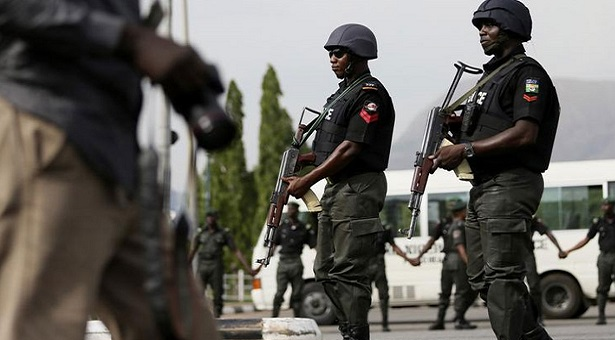
Why Police Avert Communal Crisis as Youths Clash Over Colleague’s Death in Kaduna

ADC Tackles Tinubu Over 2027 Manifesto, Says APC Recycling Failed Campaign Promises