
FEATURES
Why Some Nigerian Graduates Are Rejecting NYSC in 2026: Security, N77k Allowance, No Jobs


By Gift Oshevire
BEYOND THE KHAKI: WHY SOME NIGERIAN GRADUATES ARE SAYING NO TO NYSC
For many Nigerian graduates, completing university should mark the beginning of a new chapter — including the mandatory National Youth Service Corps (NYSC). But for some, the decision is no longer straightforward.
Concerns over security, financial pressure and unemployment are forcing many to question whether spending a year in the programme is still worthwhile.
These fears were recently brought to the fore after 20 prospective NYSC members and a civilian were kidnapped along the Owerri-Onitsha Expressway in Imo State on October 1, while travelling from Ibadan to Anambra for orientation.
Though the victims were later rescued by a joint team of military, DSS and police operatives, one mother has claimed she paid N6 million ransom before the rescue operation — a claim that has reignited debate about the safety of corps members.

It was established to promote national unity, but the NYSC scheme remains a major requirement for jobs. Avoiding it comes with consequences, as seen in the controversy surrounding former Finance Minister Kemi Adeosun, who resigned in 2018 after her NYSC exemption certificate was found to be forged.
Despite that, some graduates remain firmly opposed to participating.
For this feature, one graduate who has decided not to participate in NYSC shares his reasons.
I Don’t See Its Importance
“I don’t see its importance. It’s 2026, and I don’t understand why we still have to serve a mandatory one year for graduates to get jobs. To start with, there aren’t even many jobs. The whole ‘you need to serve in order to get a job’ system is crazy and needs to be scrapped because it holds no significant benefit.”
According to him, NYSC does not guarantee employment.
“It’s not a job guarantee. The benefits are very minimal. You get cultural exchange and the social currency that comes from meeting new people. These are pretty low rewards for spending an entire year camping and serving.
N77,000 Allowance Not Enough
The financial burden was another major concern.“The cost of surviving and relocating to a new state isn’t cheap. Sure, they pay ₦77,000 a month, but that’s barely enough money to survive on for a month. It’s expensive and isn’t pocket-friendly.
Security: The Biggest Fear
He said the decision was made long before university, influenced by encounters with corps members and their living conditions.Security was the strongest factor.“
A huge part of the security concerns influenced my decision not to go for the NYSC programme. There are random postings to underdeveloped communities and the huge risk of travelling to your assigned state.”
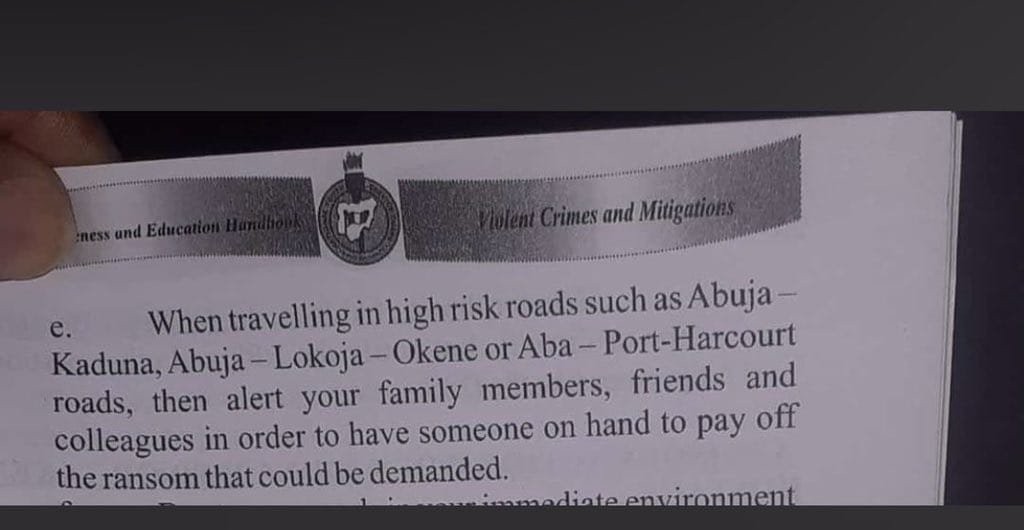
Travel advice on NYSC handbook
“The dangers NYSC poses aren’t worth the one-year time, energy and resources put into it.
On whether NYSC remains relevant to Nigerian graduates today, the response was an emphatic no.
The graduate argued that the scheme was originally established as a tool for national integration and unity but has failed to achieve those objectives.
“I genuinely do not think it is relevant or see its importance whatsoever. NYSC was established as a tool for nation-building and unity, but it doesn’t seem to be achieving those objectives. We still have tribalism and bigotry across Nigeria, and there is still a lack of unity.”
The graduate also questioned the argument that NYSC serves as a gateway to employment.
“A huge percentage of served youths aren’t employed, even though the nation still insists that NYSC is one of the pivotal ways to get a government job. Only a small percentage are able to get such jobs, and even then, nepotism and connections often have their say.”
For the graduate, a system that is no longer achieving its intended objectives should be reconsidered.
“It doesn’t make sense that a system that isn’t serving its purpose should continue to be compulsory.”
Despite the decision not to participate, the graduate said there was no feeling of guilt or regret.
“I don’t feel any morsel of remorse for not serving. It was a completely unanimous decision.”
The graduate also stated that nothing would change his position on the scheme.
“Genuinely, absolutely nothing would change my stance. I think it should be scrapped entirely because it is outdated, doesn’t serve any meaningful purpose and is utterly useless. Its rewards are marginal.”
Although the graduate acknowledged that NYSC may once have been seen as a means of contributing to national development, they believe its original value has diminished.
“If I was ever to participate in the programme, it would be a hundred percent for the cultural experience, meeting new people and building social connections. Sadly, all these have faded away from the programme, while the risks it poses are too much.”
The graduate, however, rejected the idea that refusing to participate automatically makes someone less patriotic.
“I don’t think it’s less patriotic. Your parents may complain about you refusing to serve your country and jump at the chance to wear the once-coveted khaki, but I don’t think it’s the same case anymore.”
They argued that refusing to participate could instead be viewed as a form of protest against a system they believe has become outdated.
“All things considered, it’s sensible to boycott the whole programme altogether. Maybe then the government could finally see reason to scrap this nuisance and reconsider what NYSC is supposed to achieve.”
The views expressed reflect a growing debate among young Nigerians about whether the NYSC scheme, established to promote national unity, still reflects today’s realities. While it remains compulsory, concerns over kidnapping, N77k allowance, and unemployment continue to fuel calls for reform or scrapping of the programme.






Anambra Building Collapse: Mother, 14-Year-Old Daughter Crushed to Death

Why Some Nigerian Graduates Are Rejecting NYSC in 2026: Security, N77k Allowance, No Jobs

Isoko North Chairman Ogorugba Pledges Support for LGAs Information Officers of NUJ, NUIS, Youth Devt

Ondo NAF Plane Crash: CAS Leads Recovery Efforts in Igbokoda, Assures Probe

NYSC Abduction: Mother Pays N6m Ransom to Secure Son’s Release

83 Army Division: New Air Defence Unit to Strengthen Security, Protect Oil Assets in Delta — Oborevwori

2027 Election Tribunals: CJN Warns Judges, Lawyers Against Unethical Conduct

Delta Police Arrest 3 Suspected Cultists, Recover AK-47, Pump-Action Guns
UPDATE: Imo NYSC Kidnap: Mother Says She Paid N6m Ransom Before Joint Security Team Rescued Son, 20 Others

Umahi: Contractors who Collect FG funds and Abandon Projects risk EFCC, ICPC action

Ondo Traditional Chief Shot Dead During Colleague’s Burial Rites

Edo Security: Group Lauds Gov Okpebholo For Ending Cult Killings, Tackling Kidnapping

Peter Obi: ‘I Have No Evidence I Won 2023 Presidential Election’

Delta North: Okowa Hails Asagba of Asaba’s Two Years Of Service-Driven Leadership

Trans-Forcados Oil Spill: Oborevwori Orders Medical Teams, Cleanup as Affected Communities Rise to 216