FEATURED
IPC Trains Delta Online Publishers on Ethical Election Reporting, Fact-checking


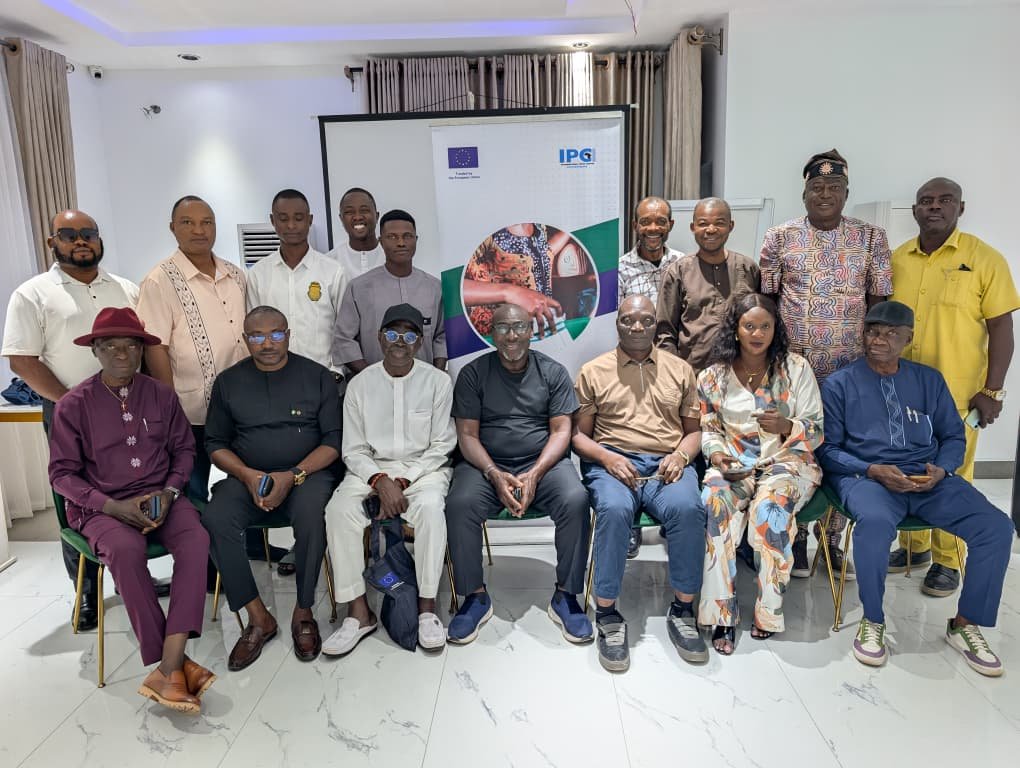
Online Publishers operating under the aegis of the Delta Online Publishers Forum (DOPF) have been trained on professional reporting on elections ahead of the 2027 general election by the International Press Centre (IPC), Lagos, at a training session held on Friday at the BON Hotel Hyatti, Ekpan, Delta state.
The training session was packaged as part of IPC’s efforts to strengthen professional reporting on elections and democratic governance as the lead implementing partner of the European Union Support to Media and Democratic Governance in Nigeria Phase II (EUSDGN 2) programme organised under Component 4.
Mr. Lanre Arogundade, Executive Director of IPC, led the interactive session for online media leaders and platform owners. The roundtable focused on promoting human-interest reporting and empowering journalists to hold politicians accountable for their campaign pledges through strategic agenda-setting.
He explained that the session stemmed from a European Union evaluation, which found that previous training for journalists had little impact on their work.
Arogundade noted that despite years of instruction on inclusive reporting for marginalized groups and tackling digital misinformation, actual coverage of electoral issues has not significantly changed hence the change of strategy in the training method for media practitioners.

He noted that journalists attributed their limitations to media executives, publishers, and editors who act as gatekeepers for public information.

According to him, because these decision-makers control the news content, they inadvertently restrict journalists’ output and the overall impact of their work on the democratic environment.
To resolve this, he disclosed that IPC decided to engaged with media owners and newsroom executives, adding that the Warri session is part of an ongoing robust national initiative, following similar engagements with online and print media leaders in Lagos, Abuja, Kano, Ibadan, and Ilorin.
“IPC has redirected its focus to the media owners and publishers, particularly the online platforms, which are closer to social media, as the information space is growing fast”.
According to him, the online publishers and executives are expected to play active roles in the development of Nigerian democracy by focusing on stories that will protect the interests of the marginalised individuals.
Participants learned how to collaborate with key stakeholders like INEC, security agencies, and civil society groups to produce reports that enhance voter education and combat apathy. The session emphasized the responsibility of publishers to champion gender balance and provide visibility for youth and marginalized groups, particularly since women remain underrepresented in Nigerian leadership.
He also highlighted the Media Code of Election Coverage, stressing the importance of fact-checking and tackling digital misinformation.


By analyzing current newsroom realities and operational challenges, the session explored ways to enhance impactful reporting on development, democratic governance, and the electoral process.
Arogundade therefore, challenged the participants to begin a series of reports that will hold the government and politicians accountable, noting that as the elections are approaching, they must start following up on the claims and electoral promises by upholding the highest standards of professionalism, accuracy, fairness, and responsibility in reporting elections and governance issues.
He also stressed the importance of ensuring that media reports promote inclusivity and contribute to peaceful and credible democratic processes.
He charged the participants to start setting an agenda for the politicians before the election.
Mr Arogundade said; “work on a theory of change, which will turn the Delta Online Publishers Forum into an accountability forum which will not be influenced by external factors by countering disinformation and misinformation through their commitment, attitude and aptitude to fact-checking.
“By aptitude, I mean your commitment to wanting to learn and use all the available resources and tools for fact-checking without looking at the rigour attached to the process,” he said.
He encouraged them to adopt digital tools to improve efficiency and simplify their work. He noted that using these technologies can reduce the need for a physical presence in potentially dangerous locations, aligning with IPC’s commitment to journalist safety and security.
Olusola Oludiran, a reporter for the International Press Centre’s online platform, the Nigerian Democratic Report, led a session on fact-checking and strategies to combat election-related disinformation. The training highlighted how misinformation impacts the stability of Nigeria’s democracy
He noted that false election-related information can lead to voter suppression, erode trust in the system, and delegitimise results, thereby undermining the country’s democratic process.
He noted that elections trigger a massive surge in political information that spreads quickly across social media and news sites. He warned that this environment often fosters false or misleading content designed to sway public opinion, undermine institutions, and manipulate election results.
He suggests fact-checking as the essential safeguard for electoral integrity against misinformation and disinformation.
Oludiran described fact-checking as a vital defense for electoral integrity, defining it as a specialized form of journalism dedicated to providing objective analysis of public claims. He noted that its purpose is to correct misconceptions and enhance public understanding of critical issues.
According to him, while FactCheck is a subset of journalism, the process of fact verification is more rigorous than regular newswriting or features writing because it is more investigative in nature; as a result, journalists must be inclined to engage in the process to sanitise the tainted information space.
He also encouraged the participants to start using the available tools to debunk fake news, particularly the deepfakes and misleading social media content, which can pose a challenge to the information space ahead of the election.
Mr. Emmanuel Enebeli, Chairman of the Delta Online Publishers (DOPF), thanked the IPC for its intervention and affirmed that member platforms are prepared to support democratic development. He also mentioned that the forum is already developing a strategic agenda to present to politicians before the forthcoming elections.
Mr Onitsha Shedrack, the Secretary of the forum, also enjoined the members to start influencing their media platforms by writing the reports that will effect change and uplift democracy in the country. He also called on the other participants to do so equally.
Celestine Ukah, a media executive from Area News Nigeria, noted that he has acquired more knowledge on how to fact-check and verify information before sharing. He noted that the interface has also exposed him to the new story ideas he will be working with, especially as far as gender issues are concerned.
Other participants expressed appreciation to the organisers, noting that the discussions had enhanced their understanding of ethical election reporting, fact-checking, and the media’s role in safeguarding Nigeria’s democracy.